Unlocking the power of the Truthifi Score: is your financial health at risk?

Unlocking the power of the Truthifi Score: is your financial health at risk?
Unlocking the power of the Truthifi Score: is your financial health at risk?
In this article
Managing your investments isn’t just about watching numbers grow—it’s about making sure your money is working for you, not against you. Yet, countless investors unknowingly lose thousands of dollars every year due to hidden fees, poor alignment with financial goals, and underperforming portfolios.
Here’s the kicker: Most investors don’t even realize it’s happening.
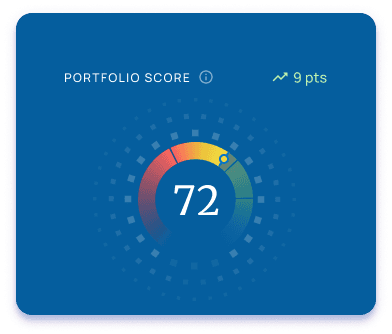
That’s where the Truthifi Score comes in. This game-changing tool breaks down your financial setup into three crucial dimensions—Alignment, Credibility, and Performance—to uncover blind spots and put you back in control. Let’s dive in and see how it can revolutionize your financial future.
Alignment: is your money working for you in the way you want it to?
You wouldn’t wear shoes that don’t fit, so why invest in a strategy that isn’t tailored to your goals? Alignment ensures your financial plan is designed around your objectives, risk tolerance, and long-term aspirations.
Common pitfalls that kill your wealth
Your portfolio is too conservative → Many investors miss out on growth opportunities because their investments are too risk-averse. That means slower gains and a harder time reaching retirement goals. (See the full analysis)
Your advisor’s recommendations don’t match your goals → Advisors should build a strategy tailored to you, not push generic, one-size-fits-all solutions.
Conflicts of interest → Some advisors push products that earn them higher commissions, even if they’re not in your best interest. Sound familiar?
Truthifi Diagnostics:
Overconcentration in proprietary funds → Some investors are unknowingly locked into expensive, advisor-driven funds that limit their growth potential.
Lack of tax efficiency → Poorly structured investments result in excessive tax liabilities, eating away at returns.
Excessive hidden cash → Too much idle cash in portfolios can drastically reduce long-term gains.
Misaligned risk levels → Some portfolios take on either too much or too little risk compared to investor goals.
High-fee annuities → Many investors are sold annuities that benefit the advisor more than the client.
…and many more (See the full analysis)
Bottom Line: If your investments aren’t aligned with your future, it’s time for a change.
Credibility: can you trust your advisor?
Think your advisor has your best interests at heart? You might want to double-check.
Transparency is everything when it comes to financial advising. If your advisor isn’t upfront about fees, potential conflicts, or their investing strategy, that’s a red flag.
Red flags to watch out for:
Hidden fees → If you don’t know exactly what you’re paying, you’re probably paying too much.
Advisor misconduct → Some advisors have disciplinary histories that could put your money at risk. Have you checked your advisor’s record?
Confusing investment strategies → If your advisor can’t explain their plan for your money in simple terms, that’s a problem.
Truthifi Diagnostics:
Undisclosed advisor commissions → Some advisors earn hidden commissions by recommending high-fee products.
Regulatory violations → Many investors are unaware that their advisor has past disciplinary actions.
Ongoing conflicts of interest → Some advisors push financial products that benefit them rather than the investor.
Fee obfuscation → Investors often don’t realize they are paying excessive management or transaction fees.
Revenue-sharing agreements → Certain advisors prioritize investment products due to undisclosed compensation agreements.
…and many more (See the details)
Bottom Line: If you don’t know exactly what you’re paying—and who you’re trusting—it’s time to dig deeper.
Performance: is your portfolio pulling its weight?
Investing is all about making your money grow, right? But here’s the harsh reality: Many portfolios underperform because of poor risk management, excessive fees, or inefficient diversification.
What’s Draining Your Portfolio?
Low returns for high risk → If you’re taking on risk, you should be rewarded. If your returns aren’t keeping up with the risk level, you’re losing money.
Overconcentration in a single sector → Having all your eggs in one basket is a recipe for disaster.
Hidden cash drag → Excessive cash sitting in your portfolio can reduce long-term growth potential.
Truthifi Diagnostics:
Excessive advisory fees → Many portfolios are weighed down by high management fees that significantly reduce returns.
Inefficient asset allocation → Some investors unknowingly hold outdated or poorly diversified portfolios.
High cash drag → Portfolios with excessive cash holdings miss out on compounding growth.
Overuse of active funds → Actively managed funds often underperform their benchmarks after fees are accounted for.
Failure to rebalance → Many portfolios drift away from optimal allocation over time, increasing risk exposure.
…and many more (See the full list)
Bottom Line: If your portfolio isn’t optimized, you’re leaving money on the table.
Tracking and optimizing your Truthifi Score over time
The Truthifi Score is more than just a static number; it’s a dynamic tool designed to evolve with your financial journey. By continuously analyzing over 65 proprietary red flags, the Score provides real-time insights into your financial health, ensuring you stay informed and proactive. (Learn more)
How Truthifi Keeps You Updated
Instant Alerts → Stay ahead with immediate notifications whenever your Score changes due to advisor actions, portfolio adjustments, or emerging financial risks. (More details)
Score Trending Over Time → Visualize your financial progress with month-over-month tracking, helping you understand the impact of your decisions on Alignment, Credibility, and Performance. (See how it works)
Comparison Benchmarks → Gauge your financial standing by comparing your Score to peers within your demographic, ensuring your investment strategies remain competitive.
Customized Insights → Receive tailored insights pinpointing factors influencing your Score, that help you know when it’s time to focus—and on what.
Staying on the same page as your advisor
A transparent relationship with your financial advisor is crucial. The Truthifi Score serves as a bridge to foster this collaboration:
How the score helps improve advisor collaboration
Objective Performance Reviews → Utilize the Score as a factual basis for discussions, ensuring your advisor’s recommendations align with your financial objectives.
Fee & Strategy Transparency → Identify and address any hidden fees or misaligned investment strategies, promoting openness and trust in your advisory relationship.
Track Advisor Impact → Monitor the effectiveness of your advisor’s suggestions by observing corresponding changes in your Score, holding them accountable for their advice.
Proactive Adjustments → Collaborate with your advisor to make timely, informed decisions, preventing minor issues from escalating into significant financial setbacks.
By integrating the Truthifi Score into your financial routine, you not only gain a comprehensive understanding of your current standing but also equip yourself with the tools to navigate your financial future confidently. Embrace this proactive approach and ensure your investments are consistently aligned with your goals.
Your Truthifi Score isn’t just a one-time evaluation—it’s a living metric that evolves alongside your financial journey. By monitoring changes in your score over time, you can stay ahead of financial pitfalls, make proactive adjustments, and continuously improve your financial standing.
Managing your investments isn’t just about watching numbers grow—it’s about making sure your money is working for you, not against you. Yet, countless investors unknowingly lose thousands of dollars every year due to hidden fees, poor alignment with financial goals, and underperforming portfolios.
Here’s the kicker: Most investors don’t even realize it’s happening.
That’s where the Truthifi Score comes in. This game-changing tool breaks down your financial setup into three crucial dimensions—Alignment, Credibility, and Performance—to uncover blind spots and put you back in control. Let’s dive in and see how it can revolutionize your financial future.
Alignment: is your money working for you in the way you want it to?
You wouldn’t wear shoes that don’t fit, so why invest in a strategy that isn’t tailored to your goals? Alignment ensures your financial plan is designed around your objectives, risk tolerance, and long-term aspirations.
Common pitfalls that kill your wealth
Your portfolio is too conservative → Many investors miss out on growth opportunities because their investments are too risk-averse. That means slower gains and a harder time reaching retirement goals. (See the full analysis)
Your advisor’s recommendations don’t match your goals → Advisors should build a strategy tailored to you, not push generic, one-size-fits-all solutions.
Conflicts of interest → Some advisors push products that earn them higher commissions, even if they’re not in your best interest. Sound familiar?
Truthifi Diagnostics:
Overconcentration in proprietary funds → Some investors are unknowingly locked into expensive, advisor-driven funds that limit their growth potential.
Lack of tax efficiency → Poorly structured investments result in excessive tax liabilities, eating away at returns.
Excessive hidden cash → Too much idle cash in portfolios can drastically reduce long-term gains.
Misaligned risk levels → Some portfolios take on either too much or too little risk compared to investor goals.
High-fee annuities → Many investors are sold annuities that benefit the advisor more than the client.
…and many more (See the full analysis)
Bottom Line: If your investments aren’t aligned with your future, it’s time for a change.
Credibility: can you trust your advisor?
Think your advisor has your best interests at heart? You might want to double-check.
Transparency is everything when it comes to financial advising. If your advisor isn’t upfront about fees, potential conflicts, or their investing strategy, that’s a red flag.
Red flags to watch out for:
Hidden fees → If you don’t know exactly what you’re paying, you’re probably paying too much.
Advisor misconduct → Some advisors have disciplinary histories that could put your money at risk. Have you checked your advisor’s record?
Confusing investment strategies → If your advisor can’t explain their plan for your money in simple terms, that’s a problem.
Truthifi Diagnostics:
Undisclosed advisor commissions → Some advisors earn hidden commissions by recommending high-fee products.
Regulatory violations → Many investors are unaware that their advisor has past disciplinary actions.
Ongoing conflicts of interest → Some advisors push financial products that benefit them rather than the investor.
Fee obfuscation → Investors often don’t realize they are paying excessive management or transaction fees.
Revenue-sharing agreements → Certain advisors prioritize investment products due to undisclosed compensation agreements.
…and many more (See the details)
Bottom Line: If you don’t know exactly what you’re paying—and who you’re trusting—it’s time to dig deeper.
Performance: is your portfolio pulling its weight?
Investing is all about making your money grow, right? But here’s the harsh reality: Many portfolios underperform because of poor risk management, excessive fees, or inefficient diversification.
What’s Draining Your Portfolio?
Low returns for high risk → If you’re taking on risk, you should be rewarded. If your returns aren’t keeping up with the risk level, you’re losing money.
Overconcentration in a single sector → Having all your eggs in one basket is a recipe for disaster.
Hidden cash drag → Excessive cash sitting in your portfolio can reduce long-term growth potential.
Truthifi Diagnostics:
Excessive advisory fees → Many portfolios are weighed down by high management fees that significantly reduce returns.
Inefficient asset allocation → Some investors unknowingly hold outdated or poorly diversified portfolios.
High cash drag → Portfolios with excessive cash holdings miss out on compounding growth.
Overuse of active funds → Actively managed funds often underperform their benchmarks after fees are accounted for.
Failure to rebalance → Many portfolios drift away from optimal allocation over time, increasing risk exposure.
…and many more (See the full list)
Bottom Line: If your portfolio isn’t optimized, you’re leaving money on the table.
Tracking and optimizing your Truthifi Score over time
The Truthifi Score is more than just a static number; it’s a dynamic tool designed to evolve with your financial journey. By continuously analyzing over 65 proprietary red flags, the Score provides real-time insights into your financial health, ensuring you stay informed and proactive. (Learn more)
How Truthifi Keeps You Updated
Instant Alerts → Stay ahead with immediate notifications whenever your Score changes due to advisor actions, portfolio adjustments, or emerging financial risks. (More details)
Score Trending Over Time → Visualize your financial progress with month-over-month tracking, helping you understand the impact of your decisions on Alignment, Credibility, and Performance. (See how it works)
Comparison Benchmarks → Gauge your financial standing by comparing your Score to peers within your demographic, ensuring your investment strategies remain competitive.
Customized Insights → Receive tailored insights pinpointing factors influencing your Score, that help you know when it’s time to focus—and on what.
Staying on the same page as your advisor
A transparent relationship with your financial advisor is crucial. The Truthifi Score serves as a bridge to foster this collaboration:
How the score helps improve advisor collaboration
Objective Performance Reviews → Utilize the Score as a factual basis for discussions, ensuring your advisor’s recommendations align with your financial objectives.
Fee & Strategy Transparency → Identify and address any hidden fees or misaligned investment strategies, promoting openness and trust in your advisory relationship.
Track Advisor Impact → Monitor the effectiveness of your advisor’s suggestions by observing corresponding changes in your Score, holding them accountable for their advice.
Proactive Adjustments → Collaborate with your advisor to make timely, informed decisions, preventing minor issues from escalating into significant financial setbacks.
By integrating the Truthifi Score into your financial routine, you not only gain a comprehensive understanding of your current standing but also equip yourself with the tools to navigate your financial future confidently. Embrace this proactive approach and ensure your investments are consistently aligned with your goals.
Your Truthifi Score isn’t just a one-time evaluation—it’s a living metric that evolves alongside your financial journey. By monitoring changes in your score over time, you can stay ahead of financial pitfalls, make proactive adjustments, and continuously improve your financial standing.
How AI can help you actually move your Truthifi Score
Connect your accounts to Truthifi Connect, then ask Claude or ChatGPT to translate your current Truthifi Score into the three changes that would move it most. Vague advice doesn't help; ranked specifics do.
For each suggested change, ask your agent to run the cost-benefit. Switching out a 0.85% expense ratio fund for a 0.04% equivalent costs nothing in tax-deferred accounts and saves real money over the long run, and that's the kind of math that should drive action.
Set the recheck. Have your agent re-score your portfolio quarterly and email you only when the score changes by more than 5 points. That's enough signal to act on without being noise.
Try it with Truthifi: Start for free at app.truthifi.com — connect your accounts and ask the Truthifi agent to see your Truthifi Score and what would move it.
Prefer a dedicated AI connection? Truthifi Connect lets Claude, ChatGPT, and Perplexity read your live portfolio data directly.
What’s next? take back control.
The Truthifi Score isn’t just a number—it’s your financial wake-up call. By assessing Alignment, Credibility, and Performance, you get a crystal-clear picture of your wealth setup. But knowing isn’t enough—you need to act.
Your Next Steps:
Uncover hidden fees → Review your portfolio and see where excessive costs may be draining your returns.
Hold your advisor accountable → Ensure they’re making decisions that benefit you, not their bottom line.
Optimize your investments → Make sure your money is in the right place, working hard to meet your goals.
Stay vigilant → Financial pitfalls can arise at any time—monitor your Truthifi Score regularly and adjust when necessary.
Don’t wait for losses to pile up. Take control today. Check your Truthifi Score now and take the first step toward financial security and success.
The difference between a thriving financial future and one filled with regrets is the action you take today.
About the author: Mike Young is Head of Product at Truthifi, where he leads the platform’s financial intelligence and monitoring tools. Before Truthifi, Mike built digital investment products and experiences at Merrill Lynch, TIAA, JP Morgan, and Vanguard over more than a decade, working alongside advisors and their clients across wealth management, retirement, and institutional platforms. He writes about the structures that shape financial advice — and how investors can understand them clearly.
Reviewed by Scott Blandford, Founder & CEO of Truthifi. Scott has 25+ years in financial services across Fidelity Investments, Merrill Lynch, Bank of America, and TIAA.
Related connect guides
Connect your AI to your real accounts and run an independent check using Truthifi.
Browse the full hub: Connect Guides for brokerages & investing accounts
Available for ChatGPT · Claude · Perplexity · Grok · OpenClaw.
How AI can help you actually move your Truthifi Score
Connect your accounts to Truthifi Connect, then ask Claude or ChatGPT to translate your current Truthifi Score into the three changes that would move it most. Vague advice doesn't help; ranked specifics do.
For each suggested change, ask your agent to run the cost-benefit. Switching out a 0.85% expense ratio fund for a 0.04% equivalent costs nothing in tax-deferred accounts and saves real money over the long run, and that's the kind of math that should drive action.
Set the recheck. Have your agent re-score your portfolio quarterly and email you only when the score changes by more than 5 points. That's enough signal to act on without being noise.
Try it with Truthifi: Start for free at app.truthifi.com — connect your accounts and ask the Truthifi agent to see your Truthifi Score and what would move it.
Prefer a dedicated AI connection? Truthifi Connect lets Claude, ChatGPT, and Perplexity read your live portfolio data directly.
What’s next? take back control.
The Truthifi Score isn’t just a number—it’s your financial wake-up call. By assessing Alignment, Credibility, and Performance, you get a crystal-clear picture of your wealth setup. But knowing isn’t enough—you need to act.
Your Next Steps:
Uncover hidden fees → Review your portfolio and see where excessive costs may be draining your returns.
Hold your advisor accountable → Ensure they’re making decisions that benefit you, not their bottom line.
Optimize your investments → Make sure your money is in the right place, working hard to meet your goals.
Stay vigilant → Financial pitfalls can arise at any time—monitor your Truthifi Score regularly and adjust when necessary.
Don’t wait for losses to pile up. Take control today. Check your Truthifi Score now and take the first step toward financial security and success.
The difference between a thriving financial future and one filled with regrets is the action you take today.
About the author: Mike Young is Head of Product at Truthifi, where he leads the platform’s financial intelligence and monitoring tools. Before Truthifi, Mike built digital investment products and experiences at Merrill Lynch, TIAA, JP Morgan, and Vanguard over more than a decade, working alongside advisors and their clients across wealth management, retirement, and institutional platforms. He writes about the structures that shape financial advice — and how investors can understand them clearly.
Reviewed by Scott Blandford, Founder & CEO of Truthifi. Scott has 25+ years in financial services across Fidelity Investments, Merrill Lynch, Bank of America, and TIAA.
Related connect guides
Connect your AI to your real accounts and run an independent check using Truthifi.
Browse the full hub: Connect Guides for brokerages & investing accounts
Available for ChatGPT · Claude · Perplexity · Grok · OpenClaw.
Disclaimer: This article is for educational purposes only and does not constitute financial, tax, or legal advice. It should not be construed as a personalized recommendation regarding any investment, financial advisor, or financial product. All calculations use hypothetical scenarios and historical return assumptions; actual results will vary. Past performance does not guarantee future results. Consult a qualified financial professional for guidance specific to your situation. Truthifi is an investment monitoring platform — not a financial advisor, broker-dealer, or tax professional. Truthifi does not manage assets, recommend investments, sell financial products, or provide personalized financial advice. Truthifi earns no revenue from advisor referrals, product commissions, or AUM fees. Statistics and data cited reflect publicly available sources current as of the article's publication date. Sources are linked throughout.
Disclaimer: This article is for educational purposes only and does not constitute financial, tax, or legal advice. It should not be construed as a personalized recommendation regarding any investment, financial advisor, or financial product. All calculations use hypothetical scenarios and historical return assumptions; actual results will vary. Past performance does not guarantee future results. Consult a qualified financial professional for guidance specific to your situation. Truthifi is an investment monitoring platform — not a financial advisor, broker-dealer, or tax professional. Truthifi does not manage assets, recommend investments, sell financial products, or provide personalized financial advice. Truthifi earns no revenue from advisor referrals, product commissions, or AUM fees. Statistics and data cited reflect publicly available sources current as of the article's publication date. Sources are linked throughout.
Disclaimer: This article is for educational purposes only and does not constitute financial, tax, or legal advice. It should not be construed as a personalized recommendation regarding any investment, financial advisor, or financial product. All calculations use hypothetical scenarios and historical return assumptions; actual results will vary. Past performance does not guarantee future results. Consult a qualified financial professional for guidance specific to your situation. Truthifi is an investment monitoring platform — not a financial advisor, broker-dealer, or tax professional. Truthifi does not manage assets, recommend investments, sell financial products, or provide personalized financial advice. Truthifi earns no revenue from advisor referrals, product commissions, or AUM fees. Statistics and data cited reflect publicly available sources current as of the article's publication date. Sources are linked throughout.
Ready to get started?
Stop living in spreadsheets.
$4,000,000,000+
Monitored
18,000+
Providers covered
Bank-grade
Security
features
Company
Legal
Stop living in spreadsheets.
$4,000,000,000+
Monitored
18,000+
Providers covered
Bank-grade
Security
features
Company
Legal
Stop living in spreadsheets.
$4,000,000,000+
Monitored
18,000+
Providers covered
Bank-grade
Security
features
Company
Legal