Your bank has years of data on you. Your self-hosted AI has none of it.
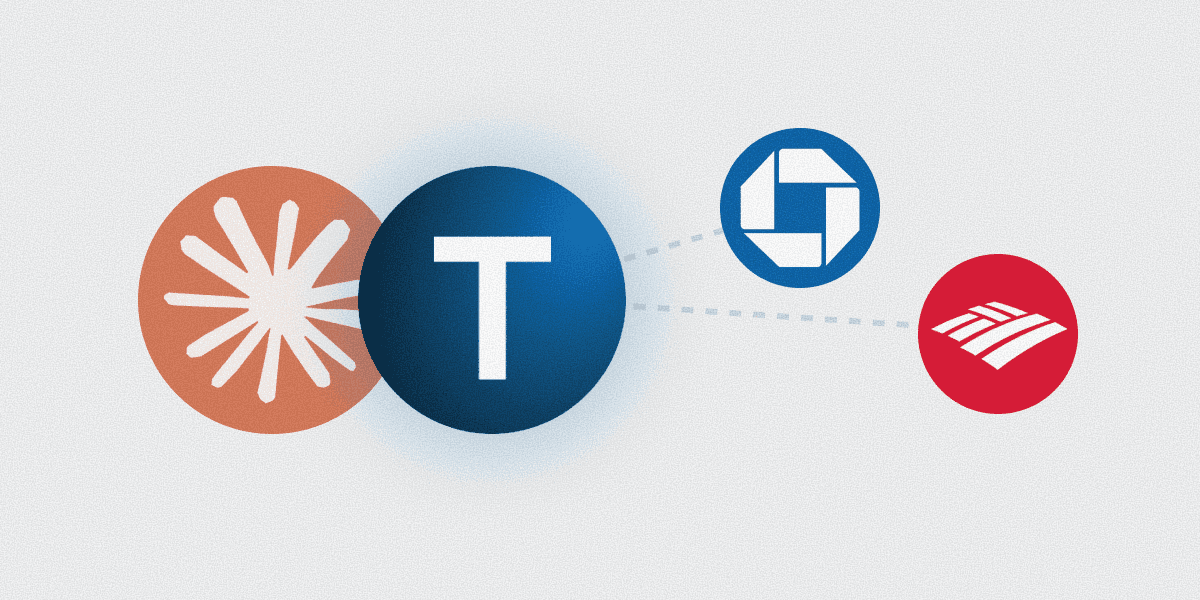

Your bank has years of data on you. Your self-hosted AI has none of it.
Your bank has years of data on you. Your self-hosted AI has none of it.
In this article
What you can actually ask once OpenClaw is connected
Your bank knows everything. The day-to-day cash flow, the recurring subscriptions you forgot about, the times you tapped overdraft, the typical balance going into each month. Until now, your bank's data sat in your bank's app and went nowhere else. Even your AI agent — even one running on your own server — had no idea any of it existed.
Once you connect Truthifi to OpenClaw, that changes. From any OpenClaw channel — web, Discord, Telegram, custom — you can ask:
"What did I spend at restaurants last month, and how does that compare to the trailing six-month average?"
"How much have I paid in bank fees this year? Break it down by fee type."
"What recurring charges hit my Chase account that I might want to review?"
"Across my Chase and BofA accounts, what's my actual liquid cash right now?"
"Did any of my deposits this week look unusual compared to my typical pattern?"
"Find my five largest non-recurring purchases over the last 90 days."
"What's my month-over-month savings rate based on inflows minus outflows from primary checking?"
"Which subscriptions am I paying for that I haven't used in three months?" (OpenClaw infers usage from absence of related transactions, not perfectly but useful as a starting point.)
Same conversational interface you already use OpenClaw for. The bank data shows up where you ask the question — your laptop, your Discord with your spouse, your Telegram on a flight.
A worked example. A family runs a shared OpenClaw instance with both spouses authenticated. The Discord channel is where they coordinate household finances. One spouse asks the OpenClaw bot: "How much did we spend on travel-related categories combined last quarter, across both our Chase and BofA accounts?" OpenClaw returns the cross-account figure pulled from Truthifi, with category breakdowns. Both spouses see the answer at the same time. The follow-up "is that on track for our 2026 travel budget?" works the same way — both Truthifi for current spending and OpenClaw's reasoning about target vs actual. The kind of conversation that previously meant exporting two CSVs and reconciling in a spreadsheet now happens inline in chat.
The architecture: why this is different from giving your password to an app
The most common objection to "connect AI to my bank" is the obvious one: I don't trust some random AI tool with my banking credentials. Reasonable. The architecture here is designed around exactly that concern.
Your Chase and Bank of America credentials live at Chase and Bank of America. They never go to Truthifi, they never go to OpenClaw, they never end up on any host you control. The connection works through industry-standard aggregation: your bank shows you a screen that says "Truthifi wants to read your account data," you authenticate at the bank's own portal (not at Truthifi), and the bank issues Truthifi a read-only token. Truthifi can read what the token allows; that's it.
OpenClaw, in turn, talks to Truthifi over an MCP connection. Your OpenClaw host doesn't see your banking credentials. It doesn't even see the Truthifi-to-bank token. It sees a separate Truthifi-issued MCP token that lets it call read-only tools on Truthifi's MCP server.
Two layers of indirection. Your credentials at the bank. Truthifi's token to the bank. OpenClaw's token to Truthifi. Each layer can be revoked independently. Each layer is read-only. Compromise at any single layer doesn't compromise the others.
This is also where the design diverges from naive "Plaid-only" consumer apps. Standalone aggregator apps store your raw data on their servers and expose it back through their own UI. Truthifi inherits the same upstream relationship with your bank that aggregators have — it has to, that's how bank data is accessed in 2026 — but it stops there. The MCP layer means you don't have to use Truthifi's UI; you use OpenClaw's. And the read-only enforcement at the API surface means even if Truthifi were compromised, the worst case is data exposure, not money movement.
For self-hosted OpenClaw users, the architecture is particularly favorable: the OpenClaw host you control sits between Truthifi and the various OpenClaw channels (web, Discord, Telegram). All Truthifi data flows through your infrastructure. Nothing transits a third-party SaaS LLM provider. The privacy posture that motivated self-hosting in the first place is preserved end-to-end for banking questions specifically — meaningful because banking data is among the most sensitive personal data.
What you need
A self-hosted OpenClaw instance.
A Truthifi account with Chase and/or Bank of America linked. (New to Truthifi Connect?)
Either Node.js 20+ for the
mcporterskill, or text-editor access to~/.openclaw/openclaw.jsonfor direct config.
Setup: five steps
Full walkthrough: How to Connect Your Portfolio to OpenClaw via Truthifi MCP. Condensed:
Link Chase and BofA to Truthifi. Sign in to truthifi.com → Connections → add each bank. Bank-side OAuth handles authentication; happens once per bank.
Add Truthifi to OpenClaw. Path A:
mcporter install --target openclaw truthifi. Path B: edit~/.openclaw/openclaw.jsonto add Truthifi tomcpServerswithtype: "http"andurl: "https://api.truthifi.com/mcp".Restart the OpenClaw gateway (Path B only; mcporter handles this for you).
Authenticate via OAuth on first call. The first banking question to OpenClaw triggers a browser-based OAuth flow with Truthifi.
Verify with a prompt like "Show me my balances across Chase and BofA."
If you're running OpenClaw behind a reverse proxy, set MCP_ISSUER_URL to your public HTTPS URL. The setup guide covers why.
Your controls
You stay in control of the connection at every layer:
Revoke Truthifi's bank read access from your Chase or BofA security/connected-apps settings. Cuts off Truthifi's ability to read that specific bank.
Revoke OpenClaw's Truthifi access from truthifi.com → Settings → Connected Apps → OpenClaw → Revoke. OpenClaw can no longer call Truthifi.
Remove the connector from OpenClaw by deleting the
truthifientry in your config or runningmcporter uninstall truthifi. OpenClaw stops trying to call Truthifi.Read the audit log at truthifi.com to see exactly what OpenClaw queried, when, and from which channel.
Set per-channel rules in OpenClaw. If you only want Telegram queries to be allowed (and not Discord), OpenClaw's role/permission system lets you restrict which channels can call which MCP servers. Useful for shared family hosts where you want to scope what's queryable from where.
What OpenClaw cannot do — ever
A clear list:
No transfers, no payments, no Zelle, no money movement of any kind.
No bill pay setup or modification.
No account-setting changes (linked email, phone, security questions, 2FA).
No new account opening.
No ATM card management.
No statement-paper-mailing toggles, no overdraft settings, no debit-card limit changes.
No card-block or card-cancel actions.
OpenClaw with Truthifi reads. It does not write. There is no API path through Truthifi to a transactional endpoint at Chase or BofA. Even a fully compromised OpenClaw host cannot move your money.
Supported institutions
Truthifi's MCP supports the full roster of US banks and credit unions through industry-standard aggregation:
Chase (consumer + business)
Bank of America (consumer + business)
Wells Fargo, Citi, US Bank, PNC, Capital One (and most other top-50 US banks)
Most credit unions with online banking
Smaller community banks where the underlying aggregator has coverage
Online-first banks (Ally, Marcus, SoFi, Discover)
Your OpenClaw will see whatever you've linked in Truthifi. Add a third or fourth bank later — OpenClaw picks it up automatically with no config change.
Disconnecting
Three independent revocation paths, listed in increasing scope:
Per-bank at the bank: revoke Truthifi's read access at Chase or BofA's connected-apps screen. Cuts off the affected bank only.
OpenClaw-from-Truthifi: truthifi.com → Connected Apps → OpenClaw → Revoke. Stops OpenClaw from being able to call Truthifi at all (Truthifi's connections to your banks are unaffected).
Truthifi-from-OpenClaw: remove from
mcpServersconfig or runmcporter uninstall truthifi. OpenClaw forgets Truthifi entirely.
Use whichever scope matches what you're trying to accomplish.
What you can actually ask once OpenClaw is connected
Your bank knows everything. The day-to-day cash flow, the recurring subscriptions you forgot about, the times you tapped overdraft, the typical balance going into each month. Until now, your bank's data sat in your bank's app and went nowhere else. Even your AI agent — even one running on your own server — had no idea any of it existed.
Once you connect Truthifi to OpenClaw, that changes. From any OpenClaw channel — web, Discord, Telegram, custom — you can ask:
"What did I spend at restaurants last month, and how does that compare to the trailing six-month average?"
"How much have I paid in bank fees this year? Break it down by fee type."
"What recurring charges hit my Chase account that I might want to review?"
"Across my Chase and BofA accounts, what's my actual liquid cash right now?"
"Did any of my deposits this week look unusual compared to my typical pattern?"
"Find my five largest non-recurring purchases over the last 90 days."
"What's my month-over-month savings rate based on inflows minus outflows from primary checking?"
"Which subscriptions am I paying for that I haven't used in three months?" (OpenClaw infers usage from absence of related transactions, not perfectly but useful as a starting point.)
Same conversational interface you already use OpenClaw for. The bank data shows up where you ask the question — your laptop, your Discord with your spouse, your Telegram on a flight.
A worked example. A family runs a shared OpenClaw instance with both spouses authenticated. The Discord channel is where they coordinate household finances. One spouse asks the OpenClaw bot: "How much did we spend on travel-related categories combined last quarter, across both our Chase and BofA accounts?" OpenClaw returns the cross-account figure pulled from Truthifi, with category breakdowns. Both spouses see the answer at the same time. The follow-up "is that on track for our 2026 travel budget?" works the same way — both Truthifi for current spending and OpenClaw's reasoning about target vs actual. The kind of conversation that previously meant exporting two CSVs and reconciling in a spreadsheet now happens inline in chat.
The architecture: why this is different from giving your password to an app
The most common objection to "connect AI to my bank" is the obvious one: I don't trust some random AI tool with my banking credentials. Reasonable. The architecture here is designed around exactly that concern.
Your Chase and Bank of America credentials live at Chase and Bank of America. They never go to Truthifi, they never go to OpenClaw, they never end up on any host you control. The connection works through industry-standard aggregation: your bank shows you a screen that says "Truthifi wants to read your account data," you authenticate at the bank's own portal (not at Truthifi), and the bank issues Truthifi a read-only token. Truthifi can read what the token allows; that's it.
OpenClaw, in turn, talks to Truthifi over an MCP connection. Your OpenClaw host doesn't see your banking credentials. It doesn't even see the Truthifi-to-bank token. It sees a separate Truthifi-issued MCP token that lets it call read-only tools on Truthifi's MCP server.
Two layers of indirection. Your credentials at the bank. Truthifi's token to the bank. OpenClaw's token to Truthifi. Each layer can be revoked independently. Each layer is read-only. Compromise at any single layer doesn't compromise the others.
This is also where the design diverges from naive "Plaid-only" consumer apps. Standalone aggregator apps store your raw data on their servers and expose it back through their own UI. Truthifi inherits the same upstream relationship with your bank that aggregators have — it has to, that's how bank data is accessed in 2026 — but it stops there. The MCP layer means you don't have to use Truthifi's UI; you use OpenClaw's. And the read-only enforcement at the API surface means even if Truthifi were compromised, the worst case is data exposure, not money movement.
For self-hosted OpenClaw users, the architecture is particularly favorable: the OpenClaw host you control sits between Truthifi and the various OpenClaw channels (web, Discord, Telegram). All Truthifi data flows through your infrastructure. Nothing transits a third-party SaaS LLM provider. The privacy posture that motivated self-hosting in the first place is preserved end-to-end for banking questions specifically — meaningful because banking data is among the most sensitive personal data.
What you need
A self-hosted OpenClaw instance.
A Truthifi account with Chase and/or Bank of America linked. (New to Truthifi Connect?)
Either Node.js 20+ for the
mcporterskill, or text-editor access to~/.openclaw/openclaw.jsonfor direct config.
Setup: five steps
Full walkthrough: How to Connect Your Portfolio to OpenClaw via Truthifi MCP. Condensed:
Link Chase and BofA to Truthifi. Sign in to truthifi.com → Connections → add each bank. Bank-side OAuth handles authentication; happens once per bank.
Add Truthifi to OpenClaw. Path A:
mcporter install --target openclaw truthifi. Path B: edit~/.openclaw/openclaw.jsonto add Truthifi tomcpServerswithtype: "http"andurl: "https://api.truthifi.com/mcp".Restart the OpenClaw gateway (Path B only; mcporter handles this for you).
Authenticate via OAuth on first call. The first banking question to OpenClaw triggers a browser-based OAuth flow with Truthifi.
Verify with a prompt like "Show me my balances across Chase and BofA."
If you're running OpenClaw behind a reverse proxy, set MCP_ISSUER_URL to your public HTTPS URL. The setup guide covers why.
Your controls
You stay in control of the connection at every layer:
Revoke Truthifi's bank read access from your Chase or BofA security/connected-apps settings. Cuts off Truthifi's ability to read that specific bank.
Revoke OpenClaw's Truthifi access from truthifi.com → Settings → Connected Apps → OpenClaw → Revoke. OpenClaw can no longer call Truthifi.
Remove the connector from OpenClaw by deleting the
truthifientry in your config or runningmcporter uninstall truthifi. OpenClaw stops trying to call Truthifi.Read the audit log at truthifi.com to see exactly what OpenClaw queried, when, and from which channel.
Set per-channel rules in OpenClaw. If you only want Telegram queries to be allowed (and not Discord), OpenClaw's role/permission system lets you restrict which channels can call which MCP servers. Useful for shared family hosts where you want to scope what's queryable from where.
What OpenClaw cannot do — ever
A clear list:
No transfers, no payments, no Zelle, no money movement of any kind.
No bill pay setup or modification.
No account-setting changes (linked email, phone, security questions, 2FA).
No new account opening.
No ATM card management.
No statement-paper-mailing toggles, no overdraft settings, no debit-card limit changes.
No card-block or card-cancel actions.
OpenClaw with Truthifi reads. It does not write. There is no API path through Truthifi to a transactional endpoint at Chase or BofA. Even a fully compromised OpenClaw host cannot move your money.
Supported institutions
Truthifi's MCP supports the full roster of US banks and credit unions through industry-standard aggregation:
Chase (consumer + business)
Bank of America (consumer + business)
Wells Fargo, Citi, US Bank, PNC, Capital One (and most other top-50 US banks)
Most credit unions with online banking
Smaller community banks where the underlying aggregator has coverage
Online-first banks (Ally, Marcus, SoFi, Discover)
Your OpenClaw will see whatever you've linked in Truthifi. Add a third or fourth bank later — OpenClaw picks it up automatically with no config change.
Disconnecting
Three independent revocation paths, listed in increasing scope:
Per-bank at the bank: revoke Truthifi's read access at Chase or BofA's connected-apps screen. Cuts off the affected bank only.
OpenClaw-from-Truthifi: truthifi.com → Connected Apps → OpenClaw → Revoke. Stops OpenClaw from being able to call Truthifi at all (Truthifi's connections to your banks are unaffected).
Truthifi-from-OpenClaw: remove from
mcpServersconfig or runmcporter uninstall truthifi. OpenClaw forgets Truthifi entirely.
Use whichever scope matches what you're trying to accomplish.
Frequently asked questions
How fresh is the data Truthifi gives OpenClaw? Standard aggregation refresh is typically once per business day. For some banks Truthifi has near-real-time access. When you ask OpenClaw about a transaction that just posted, you'll see the most recent sync, which is usually less than 24 hours stale.
Can OpenClaw categorize my spending? Truthifi normalizes transactions and surfaces them with merchant data. OpenClaw can categorize on top of that — which is genuinely useful because it's reasoning about your transactions, not training-data merchants.
What about credit cards? If you have Chase or BofA credit cards, link them as separate connections in Truthifi. Same architecture: OAuth at the bank, read-only token to Truthifi, MCP token to OpenClaw.
What happens if Chase changes its API? Truthifi handles the upstream change. You don't need to touch your OpenClaw config. The MCP contract OpenClaw sees stays stable while Truthifi adapts to whatever the bank does on its end.
Can I run multiple OpenClaw users on one host with separate banking? Yes. Each OpenClaw user authenticates with Truthifi separately. User A's banking is invisible to user B. The MCP-token-per-user architecture handles isolation.
Will OpenClaw store my transaction history? OpenClaw's normal conversation history captures whatever flows through your conversation. Truthifi serves answers without persisting full datasets at OpenClaw. If you want long-term retention, that's an OpenClaw conversation-storage concern, not a Truthifi concern.
Can OpenClaw track recurring subscriptions? Yes — Truthifi's transaction data is normalized enough that OpenClaw can identify recurring patterns. Ask "find recurring monthly charges I might have forgotten about" and it'll surface candidates. Note this is heuristic; not every recurring charge is detected, especially for irregular billing cycles.
What about joint accounts? Joint accounts at Chase and BofA show up as joint accounts in Truthifi (visible to whichever joint owner linked it to Truthifi). If both account holders want OpenClaw access, each authenticates with Truthifi separately and links their own view of the joint account.
Can I scope banking queries to a specific OpenClaw channel only? Yes — OpenClaw's permission system lets you limit which channels can call which MCP servers. Useful if you want banking questions only in your private web/Telegram channels and not from the family Discord, for example.
What happens if I move my OpenClaw to a different host? The mcpServers config is portable — copy it to the new host. OAuth tokens are tied to host identity for security reasons, so you'll re-authenticate on first call from the new host. That's a deliberate design choice.
What is Truthifi?
Truthifi is a wealth-monitoring platform that aggregates your real financial accounts and exposes them via the Model Context Protocol so any MCP-aware AI assistant — OpenClaw, Claude, ChatGPT, Perplexity, Grok, Mistral — can ask questions about your actual money. Read-only by design. Bank credentials stay at the bank. The whole architecture is built around the assumption that your AI should know what you have without becoming a security risk.
For OpenClaw specifically, Truthifi is the data layer that makes self-hosted, multi-channel AI useful for everyday banking questions. Connect once, ask anywhere — web, Discord, Telegram — same data, no per-channel setup.
Connect Chase and BofA to OpenClaw →
How fresh is the data Truthifi gives OpenClaw?
Standard aggregation refresh is typically once per business day. For some banks Truthifi has near-real-time access. When you ask OpenClaw about a transaction that just posted, you'll see the most recent sync, which is usually less than 24 hours stale.
Can OpenClaw categorize my spending?
Truthifi normalizes transactions and surfaces them with merchant data. OpenClaw can categorize on top of that — which is genuinely useful because it's reasoning about your transactions, not training-data merchants.
What about credit cards?
If you have Chase or BofA credit cards, link them as separate connections in Truthifi. Same architecture: OAuth at the bank, read-only token to Truthifi, MCP token to OpenClaw.
What happens if Chase changes its API?
Truthifi handles the upstream change. You don't need to touch your OpenClaw config. The MCP contract OpenClaw sees stays stable while Truthifi adapts to whatever the bank does on its end.
Can I run multiple OpenClaw users on one host with separate banking?
Yes. Each OpenClaw user authenticates with Truthifi separately. User A's banking is invisible to user B. The MCP-token-per-user architecture handles isolation.
Will OpenClaw store my transaction history?
OpenClaw's normal conversation history captures whatever flows through your conversation. Truthifi serves answers without persisting full datasets at OpenClaw. If you want long-term retention, that's an OpenClaw conversation-storage concern, not a Truthifi concern.
Can OpenClaw track recurring subscriptions?
Yes — Truthifi's transaction data is normalized enough that OpenClaw can identify recurring patterns. Ask "find recurring monthly charges I might have forgotten about" and it'll surface candidates. Note this is heuristic; not every recurring charge is detected, especially for irregular billing cycles.
What about joint accounts?
Joint accounts at Chase and BofA show up as joint accounts in Truthifi (visible to whichever joint owner linked it to Truthifi). If both account holders want OpenClaw access, each authenticates with Truthifi separately and links their own view of the joint account.
Can I scope banking queries to a specific OpenClaw channel only?
Yes — OpenClaw's permission system lets you limit which channels can call which MCP servers. Useful if you want banking questions only in your private web/Telegram channels and not from the family Discord, for example.
What happens if I move my OpenClaw to a different host?
The mcpServers config is portable — copy it to the new host. OAuth tokens are tied to host identity for security reasons, so you'll re-authenticate on first call from the new host. That's a deliberate design choice.
Family-finance multi-channel scenarios
OpenClaw's multi-channel design lights up specifically for shared family-finance use cases, in ways that hosted SaaS AIs simply can't match because they're single-user-single-thread by default.
Shared family Discord. Both spouses authenticated to the OpenClaw Discord channel where household finances get discussed. Either spouse can ask "are we still on track for the September savings target?" — answer pulls from both their joint accounts (Truthifi-aggregated) and the answer is visible to both. Decisions made together, with shared context, in real time.
Per-user OAuth scoping on shared hosts. Truthifi's per-user scope means the OpenClaw host can serve multiple family members each with access to only their own accounts (or shared joint accounts). Kids on the family OpenClaw can see allowance balance and spending; parents can see the full picture. The MCP token isolation handles the security boundary cleanly.
Telegram coordination during travel. You're at the airport, your spouse asks Telegram OpenClaw "did the mortgage payment hit yet?" — answer comes back grounded in the actual current Chase data. No "check the app and tell me" round-trip. Travel-coordination friction goes way down.
Related connect guides
Connect your AI to your real accounts and run an independent check using Truthifi.
Browse the full hub: OpenClaw Connect Guides — connect your AI to all your accounts
Available for ChatGPT · Claude · Perplexity · Grok · OpenClaw.
Frequently asked questions
How fresh is the data Truthifi gives OpenClaw? Standard aggregation refresh is typically once per business day. For some banks Truthifi has near-real-time access. When you ask OpenClaw about a transaction that just posted, you'll see the most recent sync, which is usually less than 24 hours stale.
Can OpenClaw categorize my spending? Truthifi normalizes transactions and surfaces them with merchant data. OpenClaw can categorize on top of that — which is genuinely useful because it's reasoning about your transactions, not training-data merchants.
What about credit cards? If you have Chase or BofA credit cards, link them as separate connections in Truthifi. Same architecture: OAuth at the bank, read-only token to Truthifi, MCP token to OpenClaw.
What happens if Chase changes its API? Truthifi handles the upstream change. You don't need to touch your OpenClaw config. The MCP contract OpenClaw sees stays stable while Truthifi adapts to whatever the bank does on its end.
Can I run multiple OpenClaw users on one host with separate banking? Yes. Each OpenClaw user authenticates with Truthifi separately. User A's banking is invisible to user B. The MCP-token-per-user architecture handles isolation.
Will OpenClaw store my transaction history? OpenClaw's normal conversation history captures whatever flows through your conversation. Truthifi serves answers without persisting full datasets at OpenClaw. If you want long-term retention, that's an OpenClaw conversation-storage concern, not a Truthifi concern.
Can OpenClaw track recurring subscriptions? Yes — Truthifi's transaction data is normalized enough that OpenClaw can identify recurring patterns. Ask "find recurring monthly charges I might have forgotten about" and it'll surface candidates. Note this is heuristic; not every recurring charge is detected, especially for irregular billing cycles.
What about joint accounts? Joint accounts at Chase and BofA show up as joint accounts in Truthifi (visible to whichever joint owner linked it to Truthifi). If both account holders want OpenClaw access, each authenticates with Truthifi separately and links their own view of the joint account.
Can I scope banking queries to a specific OpenClaw channel only? Yes — OpenClaw's permission system lets you limit which channels can call which MCP servers. Useful if you want banking questions only in your private web/Telegram channels and not from the family Discord, for example.
What happens if I move my OpenClaw to a different host? The mcpServers config is portable — copy it to the new host. OAuth tokens are tied to host identity for security reasons, so you'll re-authenticate on first call from the new host. That's a deliberate design choice.
What is Truthifi?
Truthifi is a wealth-monitoring platform that aggregates your real financial accounts and exposes them via the Model Context Protocol so any MCP-aware AI assistant — OpenClaw, Claude, ChatGPT, Perplexity, Grok, Mistral — can ask questions about your actual money. Read-only by design. Bank credentials stay at the bank. The whole architecture is built around the assumption that your AI should know what you have without becoming a security risk.
For OpenClaw specifically, Truthifi is the data layer that makes self-hosted, multi-channel AI useful for everyday banking questions. Connect once, ask anywhere — web, Discord, Telegram — same data, no per-channel setup.
Connect Chase and BofA to OpenClaw →
How fresh is the data Truthifi gives OpenClaw?
Standard aggregation refresh is typically once per business day. For some banks Truthifi has near-real-time access. When you ask OpenClaw about a transaction that just posted, you'll see the most recent sync, which is usually less than 24 hours stale.
Can OpenClaw categorize my spending?
Truthifi normalizes transactions and surfaces them with merchant data. OpenClaw can categorize on top of that — which is genuinely useful because it's reasoning about your transactions, not training-data merchants.
What about credit cards?
If you have Chase or BofA credit cards, link them as separate connections in Truthifi. Same architecture: OAuth at the bank, read-only token to Truthifi, MCP token to OpenClaw.
What happens if Chase changes its API?
Truthifi handles the upstream change. You don't need to touch your OpenClaw config. The MCP contract OpenClaw sees stays stable while Truthifi adapts to whatever the bank does on its end.
Can I run multiple OpenClaw users on one host with separate banking?
Yes. Each OpenClaw user authenticates with Truthifi separately. User A's banking is invisible to user B. The MCP-token-per-user architecture handles isolation.
Will OpenClaw store my transaction history?
OpenClaw's normal conversation history captures whatever flows through your conversation. Truthifi serves answers without persisting full datasets at OpenClaw. If you want long-term retention, that's an OpenClaw conversation-storage concern, not a Truthifi concern.
Can OpenClaw track recurring subscriptions?
Yes — Truthifi's transaction data is normalized enough that OpenClaw can identify recurring patterns. Ask "find recurring monthly charges I might have forgotten about" and it'll surface candidates. Note this is heuristic; not every recurring charge is detected, especially for irregular billing cycles.
What about joint accounts?
Joint accounts at Chase and BofA show up as joint accounts in Truthifi (visible to whichever joint owner linked it to Truthifi). If both account holders want OpenClaw access, each authenticates with Truthifi separately and links their own view of the joint account.
Can I scope banking queries to a specific OpenClaw channel only?
Yes — OpenClaw's permission system lets you limit which channels can call which MCP servers. Useful if you want banking questions only in your private web/Telegram channels and not from the family Discord, for example.
What happens if I move my OpenClaw to a different host?
The mcpServers config is portable — copy it to the new host. OAuth tokens are tied to host identity for security reasons, so you'll re-authenticate on first call from the new host. That's a deliberate design choice.
Family-finance multi-channel scenarios
OpenClaw's multi-channel design lights up specifically for shared family-finance use cases, in ways that hosted SaaS AIs simply can't match because they're single-user-single-thread by default.
Shared family Discord. Both spouses authenticated to the OpenClaw Discord channel where household finances get discussed. Either spouse can ask "are we still on track for the September savings target?" — answer pulls from both their joint accounts (Truthifi-aggregated) and the answer is visible to both. Decisions made together, with shared context, in real time.
Per-user OAuth scoping on shared hosts. Truthifi's per-user scope means the OpenClaw host can serve multiple family members each with access to only their own accounts (or shared joint accounts). Kids on the family OpenClaw can see allowance balance and spending; parents can see the full picture. The MCP token isolation handles the security boundary cleanly.
Telegram coordination during travel. You're at the airport, your spouse asks Telegram OpenClaw "did the mortgage payment hit yet?" — answer comes back grounded in the actual current Chase data. No "check the app and tell me" round-trip. Travel-coordination friction goes way down.
Related connect guides
Connect your AI to your real accounts and run an independent check using Truthifi.
Browse the full hub: OpenClaw Connect Guides — connect your AI to all your accounts
Available for ChatGPT · Claude · Perplexity · Grok · OpenClaw.
Disclaimer: This article is for educational purposes only and does not constitute financial, tax, or legal advice. It should not be construed as a personalized recommendation regarding any investment, financial advisor, or financial product. All calculations use hypothetical scenarios and historical return assumptions; actual results will vary. Past performance does not guarantee future results. Consult a qualified financial professional for guidance specific to your situation. Truthifi is an investment monitoring platform — not a financial advisor, broker-dealer, or tax professional. Truthifi does not manage assets, recommend investments, sell financial products, or provide personalized financial advice. Truthifi earns no revenue from advisor referrals, product commissions, or AUM fees. Statistics and data cited reflect publicly available sources current as of the article's publication date. Sources are linked throughout.
Disclaimer: This article is for educational purposes only and does not constitute financial, tax, or legal advice. It should not be construed as a personalized recommendation regarding any investment, financial advisor, or financial product. All calculations use hypothetical scenarios and historical return assumptions; actual results will vary. Past performance does not guarantee future results. Consult a qualified financial professional for guidance specific to your situation. Truthifi is an investment monitoring platform — not a financial advisor, broker-dealer, or tax professional. Truthifi does not manage assets, recommend investments, sell financial products, or provide personalized financial advice. Truthifi earns no revenue from advisor referrals, product commissions, or AUM fees. Statistics and data cited reflect publicly available sources current as of the article's publication date. Sources are linked throughout.
Disclaimer: This article is for educational purposes only and does not constitute financial, tax, or legal advice. It should not be construed as a personalized recommendation regarding any investment, financial advisor, or financial product. All calculations use hypothetical scenarios and historical return assumptions; actual results will vary. Past performance does not guarantee future results. Consult a qualified financial professional for guidance specific to your situation. Truthifi is an investment monitoring platform — not a financial advisor, broker-dealer, or tax professional. Truthifi does not manage assets, recommend investments, sell financial products, or provide personalized financial advice. Truthifi earns no revenue from advisor referrals, product commissions, or AUM fees. Statistics and data cited reflect publicly available sources current as of the article's publication date. Sources are linked throughout.
Ready to get started?
Stop living in spreadsheets.
$4,000,000,000+
Monitored
18,000+
Providers covered
Bank-grade
Security
features
Company
Legal
Stop living in spreadsheets.
$4,000,000,000+
Monitored
18,000+
Providers covered
Bank-grade
Security
features
Company
Legal
Stop living in spreadsheets.
$4,000,000,000+
Monitored
18,000+
Providers covered
Bank-grade
Security
features
Company
Legal