Connect OpenClaw to Schwab, Fidelity & Vanguard — Self-hosted, multi-channel
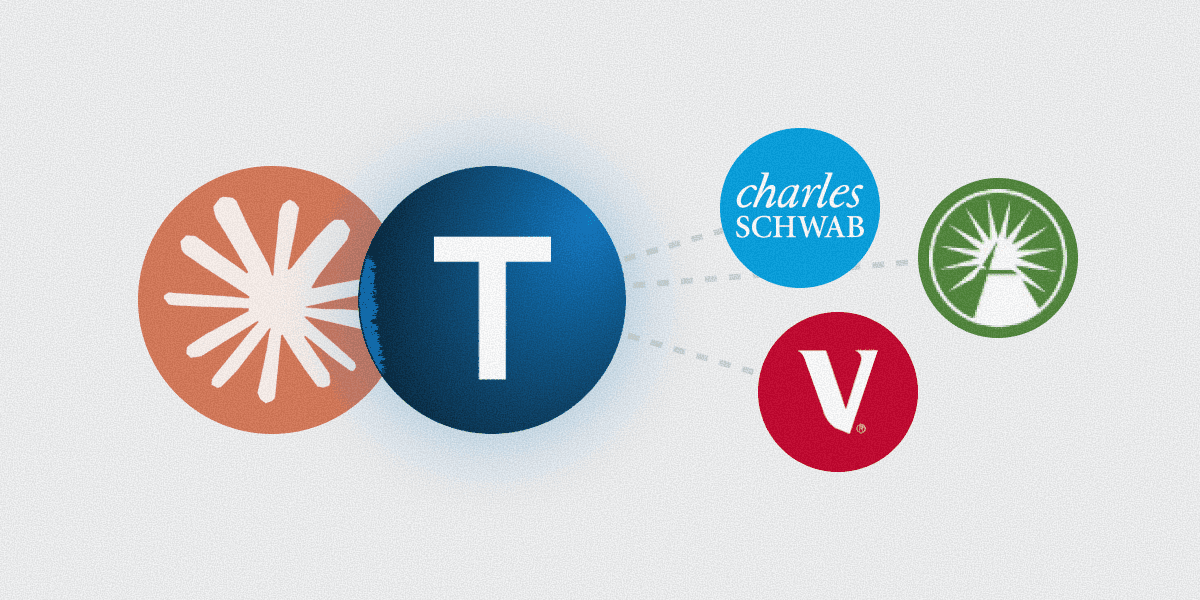

Connect OpenClaw to Schwab, Fidelity & Vanguard — Self-hosted, multi-channel
Connect OpenClaw to Schwab, Fidelity & Vanguard — Self-hosted, multi-channel
In this article
Is it safe to connect OpenClaw to your bank or brokerage?
This is the right first question, and the answer requires unpacking three things: who has your credentials, what the connection can do, and where the data flows. The short version is that the architecture here is more conservative than most AI integrations because OpenClaw is self-hosted — you own the runtime — and Truthifi's MCP is read-only by design.
Your brokerage credentials never leave your brokerage. Fidelity, Vanguard, and Schwab each authenticate you directly. Truthifi receives a read-only OAuth token from the brokerage; it does not receive your username or password. Your OpenClaw host receives a separate Truthifi-scoped MCP token; it doesn't see the brokerage token.
The connection is read-only at every layer. No path through Truthifi reaches a trade-placement, transfer, or money-movement endpoint. Even fully compromised credentials at any single layer cannot move your money — the read-only constraint is enforced in code at Truthifi, not just in policy.
Self-hosted OpenClaw means you control the runtime. Unlike Claude or ChatGPT — where your data flows through a SaaS provider's servers — OpenClaw lives on infrastructure you manage. The MCP traffic between your OpenClaw and Truthifi goes over standard HTTPS with TLS. No third-party LLM provider holds copies of your portfolio data.
The asymmetry — read everything, write nothing, on infrastructure you own — is intentional. It's the right shape for a self-hosted agent talking to your largest brokerage accounts.
For Fidelity, Vanguard, and Schwab specifically — the three big "lifetime" custodians where many investors hold the bulk of their net worth — the read-only constraint matters more than usual. These are the accounts where a security incident has the largest blast radius. The architecture ensures the worst-case outcome, even in a fully compromised scenario, is read-only data exposure rather than unauthorized money movement. For privacy-conscious users running self-hosted AI, this is the configuration that closes the last gap — making AI useful for the most-sensitive personal finance data without compromising the privacy stance that motivated self-hosting in the first place.
What you need
A self-hosted OpenClaw instance you can configure (Node-running host with shell access).
A Truthifi account with Fidelity, Vanguard, and/or Schwab linked. (New to Truthifi Connect?)
Either Node.js 20+ (for the
mcporterskill) or text-editor access to~/.openclaw/openclaw.json(for direct config).
That's it. No brokerage API keys, no developer accounts, no special access requests at any of the three custodians. The aggregation handles everything brokerage-side.
Why Truthifi — not just any aggregator
Several aggregators exist; you've probably used at least one (Plaid, Yodlee, MX). Truthifi is built specifically for the AI-grounding use case, which makes a few things different:
MCP-native by design. Truthifi exposes data over Model Context Protocol from the ground up. Other aggregators give you raw API access — useful for building software, less useful when you just want your AI to read your accounts. With Truthifi, OpenClaw discovers tools, calls them, and gets normalized data without you writing glue code.
Read-only as a product principle. Other aggregators sometimes expose write paths (transfers, payments) for fintech use cases. Truthifi doesn't. The connector is structurally incapable of writing to your accounts.
Normalized schema across institutions. Fidelity, Vanguard, and Schwab describe positions slightly differently in their raw APIs. Truthifi normalizes — same field names, same shape — so OpenClaw can answer cross-account questions without you having to specify which custodian's terminology to use.
Audit trail per OpenClaw user. Every tool call is logged at Truthifi with the OpenClaw user identity and channel (web, Discord, Telegram). You can see exactly what was queried, when, and from where.
Truthifi Score and findings. A layer above raw data — fee analysis, concentration warnings, expense-ratio benchmarking. OpenClaw can pull these alongside raw positions, which makes its answers more useful than a generic aggregator would allow.
Setup: five steps
Detailed walkthrough is in the full setup guide: How to Connect Your Portfolio to OpenClaw via Truthifi MCP. Condensed:
Link Fidelity, Vanguard, and Schwab to Truthifi. truthifi.com → Connections → add each brokerage. Each one is a one-time OAuth flow at the brokerage's portal.
Add Truthifi to OpenClaw. Path A:
npm install -g mcporter && mcporter install --target openclaw truthifi. Path B: edit~/.openclaw/openclaw.jsonto add Truthifi to themcpServersblock withtype: "http"andurl: "https://api.truthifi.com/mcp".Restart the OpenClaw gateway if you used Path B.
Authenticate via OAuth on first call. First brokerage question to OpenClaw triggers an OAuth flow with Truthifi in your browser. Sign in, grant the read-only scope.
Verify with a prompt like "Show me my positions across Fidelity, Vanguard, and Schwab with expense ratios."
If you run OpenClaw behind a reverse proxy, set MCP_ISSUER_URL to your public HTTPS URL — otherwise OAuth metadata advertises localhost and the redirect fails.
Supported brokerages
Truthifi's MCP supports the full roster of major US brokerages — beyond just Fidelity, Vanguard, and Schwab:
Fidelity (taxable, IRA, 401(k) where employer participation allows)
Vanguard (taxable, IRA, 401(k))
Charles Schwab (taxable, IRA, employer-equity plans)
Merrill (Edge and full-service)
Morgan Stanley (E*TRADE and traditional)
TIAA, Edward Jones, Raymond James (other major full-service brokerages)
Plus retail trading apps (Robinhood, E*TRADE, M1, Public, SoFi, Stash, Acorns)
Whatever you've linked in Truthifi is what OpenClaw can see. Add a fourth, fifth, or tenth brokerage later; OpenClaw picks them up automatically with no OpenClaw-side config change.
How Truthifi's MCP connection works
The data flow from your brokerage to OpenClaw, layer by layer:
Brokerage to Truthifi. Truthifi's aggregation layer connects to Fidelity, Vanguard, Schwab, etc., using each brokerage's official read-only API or industry-standard data-sharing protocol. The OAuth grant is read-only.
Truthifi normalization. Raw brokerage data passes through Truthifi's normalization pipeline. Positions get a consistent schema; fees and expense ratios are pulled in; cost basis and tax-lot detail are surfaced where the brokerage exposes them.
Truthifi MCP server. The normalized data is exposed via tools at
https://api.truthifi.com/mcp. The MCP server is read-only — no write tools exist.Truthifi to OpenClaw. OpenClaw connects to the MCP server via HTTPS. OpenClaw discovers the available tools and presents them to the agent.
OpenClaw conversation. When you ask a question that requires real account data, OpenClaw calls the appropriate Truthifi tool, gets back normalized data, and reasons about it in conversation.
Multi-channel works because OpenClaw's MCP connection is per-host, not per-channel. Set it up once on the host. Every channel — web, Discord, Telegram, custom — uses the same registered MCP connection.
Truthifi vs. DIY Schwab MCP servers: which is right for you?
There's a healthy DIY ecosystem of single-brokerage MCP servers. Schwab in particular has community-built MCP servers for technical users who want full control. Honest comparison:
DIY single-brokerage MCP server (e.g., a community-built Schwab MCP):
Pros: total control over the code, no third-party in the data path, no recurring cost, can extend with custom tools, audit-able by you line-by-line. For a single-brokerage user with strong technical skills and time to invest, this is the most aligned approach.
Cons: covers exactly one brokerage. When you have positions at three custodians, you're running three MCP servers, each with its own setup, auth flow, and maintenance lifecycle. Maintenance burden when the brokerage's API changes — and brokerage APIs change. Schwab's API has been re-architected in recent years, and each rebuild has required community DIY MCPs to re-do their integration. No normalization across custodians; each MCP exposes its own schema. No fee or analytical layer. Setup is meaningful technical work — typically a multi-hour exercise for a competent developer to wire up a single brokerage. Multiply across three custodians and you're looking at a weekend.
Real-world reliability concerns: community-built single-brokerage MCPs have varying maintenance status. Some are active and well-maintained; others have been abandoned after the original author moved on. If you're betting your portfolio queries on a community MCP, you're betting on the maintainer's continued attention.
Truthifi MCP for the multi-brokerage case:
Pros: one connector covers Fidelity, Vanguard, Schwab, retail trading apps, banks, crypto exchanges. Normalized schema across them. Truthifi handles upstream API changes — when Schwab re-architects, you don't notice. Analytical layer built in (Truthifi Score, fees, findings). Setup is a single config or
mcportercommand. Operational reliability concerns are someone else's problem.Cons: Truthifi is in the data path between you and your brokerage data (though the connection is read-only and audited). Recurring cost for the higher tiers (Pro, Max) where the analytical features live. You're trusting Truthifi to maintain the brokerage integrations correctly. Some users prefer not to have any third party in the data path on principle.
The honest recommendation: for single-brokerage users with strong DIY preferences and time to invest, the homemade approach is reasonable and often preferred. For most users with multiple custodians — which is most retail investors who have been investing for more than a few years — Truthifi is the simpler and more capable choice. The cost-benefit shifts decisively in favor of Truthifi as soon as you have three or more brokerages to integrate.
Example questions
A few prompts that exercise the OpenClaw + Truthifi + multi-brokerage combination:
Total exposure: "What's my total US large-cap equity exposure across Fidelity, Vanguard, and Schwab? Express it as a percentage of total invested assets."
Fee benchmarking: "Pull expense ratios for every mutual fund I hold and rank them. Flag any over 30 basis points and tell me what comparable Vanguard funds would charge."
Cross-custodian rebalancing: "I want to move toward 60/30/10 stocks/bonds/cash. Show me what I'd need to buy or sell at each custodian to get there with minimal taxable events."
Tax-lot identification: "Which positions in my Fidelity taxable account are at a loss right now? Show cost basis, current value, and the wash-sale window."
Account-type optimization: "Are any of my high-yield assets sitting in taxable accounts when they should be in tax-advantaged ones?"
Concentration audit: "What's my single largest concentration across all three brokerages, and how has it changed over the past 12 months?"
Multi-channel routine. Sunday-night deep analysis on web, Tuesday balance ping from Telegram, Wednesday family-finance Discord conversation — same data layer, same OpenClaw, three surfaces. The kind of cross-channel continuity that pure SaaS-AI configurations can't deliver.
OpenClaw answers from real data, no pasting required. Multi-channel: ask the same question on Telegram during a coffee break or on Discord while talking to your spouse.
What OpenClaw cannot do
A clear list:
No trades, transfers, or money movement. OpenClaw cannot place a buy or sell at any brokerage.
No account-setting modifications. Linked email, phone, security settings — all unchanged by OpenClaw.
No new account opening. Self-explanatory.
No statement / paper-mailing toggles, no overdraft, no margin-related changes.
No data export to third parties. OpenClaw uses Truthifi's MCP and doesn't share data anywhere else. Truthifi doesn't either.
No cross-user data leakage on shared OpenClaw hosts. Each user authenticates separately.
The constraint is structural. Read-only is enforced in code, not just policy.
Truthifi MCP vs. every other option
The honest landscape:
For most users, especially with multiple custodians, the OpenClaw + Truthifi configuration is the highest-leverage option that doesn't put your credentials anywhere they shouldn't be.
Where this is heading: AI agents and your finances
The reason to set this up now isn't just for today's questions. It's the substrate.
OpenClaw is going to keep getting more capable. As reasoning improves, as new models drop in, as the agent gets better at multi-step financial reasoning — you don't want to be redoing the data layer each time. Set up Truthifi once, and every future capability OpenClaw gains automatically benefits from your real account data. Same connection, same MCP token, new conversational ability on top.
New MCP servers are also coming online for adjacent parts of your financial life — tax-prep tools, real estate, debt instruments, insurance. The MCP architecture means your OpenClaw absorbs them with the same mcpServers config pattern. No bespoke integrations, no per-tool credentials. Imagine asking OpenClaw "given my expected RSU vesting next quarter and my projected 2026 tax bracket, should I increase my Roth contributions now or wait?" — that's a question that needs portfolio data (Truthifi), tax-context data (a tax-software MCP, when one exists), and OpenClaw's reasoning. The architecture is ready for it; the data servers are catching up.
Multi-channel is going to matter more, not less. Discord agents for family financial conversations, Telegram for quick mobile balance checks, custom voice channels for hands-free queries while driving — same data, same agent, same trust model. Connect once, scale across channels and capabilities. The trend in agent UX is away from the single-window single-conversation pattern that ChatGPT pioneered, and toward many-channel many-context agents that know you across surfaces. OpenClaw plus Truthifi is configured for that future.
There's also a longer-term institutional angle worth considering. As more major financial institutions begin to expose MCP endpoints directly — something a handful of large custodians have hinted at — the dependency on aggregation layers may shift. Truthifi's role evolves with that shift: the normalization, analytics, and security layers remain valuable even when raw data is available directly. The value of a unified, normalized, read-only MCP doesn't go away when the underlying transport gets shorter.
How to disconnect
Three independent revocation paths, listed in increasing scope:
Per-brokerage at the brokerage: revoke Truthifi's read access at Fidelity, Vanguard, or Schwab's connected-apps screen. Cuts off only that brokerage.
OpenClaw-from-Truthifi: truthifi.com → Settings → Connected Apps → OpenClaw → Revoke. Stops OpenClaw from being able to call Truthifi at all (Truthifi's brokerage connections unaffected).
Truthifi-from-OpenClaw: remove
truthifientry frommcpServersconfig (Path B) or runmcporter uninstall truthifi(Path A). OpenClaw forgets Truthifi entirely.
Each path is independent. Pick the scope that matches what you're trying to accomplish.
Is it safe to connect OpenClaw to your bank or brokerage?
This is the right first question, and the answer requires unpacking three things: who has your credentials, what the connection can do, and where the data flows. The short version is that the architecture here is more conservative than most AI integrations because OpenClaw is self-hosted — you own the runtime — and Truthifi's MCP is read-only by design.
Your brokerage credentials never leave your brokerage. Fidelity, Vanguard, and Schwab each authenticate you directly. Truthifi receives a read-only OAuth token from the brokerage; it does not receive your username or password. Your OpenClaw host receives a separate Truthifi-scoped MCP token; it doesn't see the brokerage token.
The connection is read-only at every layer. No path through Truthifi reaches a trade-placement, transfer, or money-movement endpoint. Even fully compromised credentials at any single layer cannot move your money — the read-only constraint is enforced in code at Truthifi, not just in policy.
Self-hosted OpenClaw means you control the runtime. Unlike Claude or ChatGPT — where your data flows through a SaaS provider's servers — OpenClaw lives on infrastructure you manage. The MCP traffic between your OpenClaw and Truthifi goes over standard HTTPS with TLS. No third-party LLM provider holds copies of your portfolio data.
The asymmetry — read everything, write nothing, on infrastructure you own — is intentional. It's the right shape for a self-hosted agent talking to your largest brokerage accounts.
For Fidelity, Vanguard, and Schwab specifically — the three big "lifetime" custodians where many investors hold the bulk of their net worth — the read-only constraint matters more than usual. These are the accounts where a security incident has the largest blast radius. The architecture ensures the worst-case outcome, even in a fully compromised scenario, is read-only data exposure rather than unauthorized money movement. For privacy-conscious users running self-hosted AI, this is the configuration that closes the last gap — making AI useful for the most-sensitive personal finance data without compromising the privacy stance that motivated self-hosting in the first place.
What you need
A self-hosted OpenClaw instance you can configure (Node-running host with shell access).
A Truthifi account with Fidelity, Vanguard, and/or Schwab linked. (New to Truthifi Connect?)
Either Node.js 20+ (for the
mcporterskill) or text-editor access to~/.openclaw/openclaw.json(for direct config).
That's it. No brokerage API keys, no developer accounts, no special access requests at any of the three custodians. The aggregation handles everything brokerage-side.
Why Truthifi — not just any aggregator
Several aggregators exist; you've probably used at least one (Plaid, Yodlee, MX). Truthifi is built specifically for the AI-grounding use case, which makes a few things different:
MCP-native by design. Truthifi exposes data over Model Context Protocol from the ground up. Other aggregators give you raw API access — useful for building software, less useful when you just want your AI to read your accounts. With Truthifi, OpenClaw discovers tools, calls them, and gets normalized data without you writing glue code.
Read-only as a product principle. Other aggregators sometimes expose write paths (transfers, payments) for fintech use cases. Truthifi doesn't. The connector is structurally incapable of writing to your accounts.
Normalized schema across institutions. Fidelity, Vanguard, and Schwab describe positions slightly differently in their raw APIs. Truthifi normalizes — same field names, same shape — so OpenClaw can answer cross-account questions without you having to specify which custodian's terminology to use.
Audit trail per OpenClaw user. Every tool call is logged at Truthifi with the OpenClaw user identity and channel (web, Discord, Telegram). You can see exactly what was queried, when, and from where.
Truthifi Score and findings. A layer above raw data — fee analysis, concentration warnings, expense-ratio benchmarking. OpenClaw can pull these alongside raw positions, which makes its answers more useful than a generic aggregator would allow.
Setup: five steps
Detailed walkthrough is in the full setup guide: How to Connect Your Portfolio to OpenClaw via Truthifi MCP. Condensed:
Link Fidelity, Vanguard, and Schwab to Truthifi. truthifi.com → Connections → add each brokerage. Each one is a one-time OAuth flow at the brokerage's portal.
Add Truthifi to OpenClaw. Path A:
npm install -g mcporter && mcporter install --target openclaw truthifi. Path B: edit~/.openclaw/openclaw.jsonto add Truthifi to themcpServersblock withtype: "http"andurl: "https://api.truthifi.com/mcp".Restart the OpenClaw gateway if you used Path B.
Authenticate via OAuth on first call. First brokerage question to OpenClaw triggers an OAuth flow with Truthifi in your browser. Sign in, grant the read-only scope.
Verify with a prompt like "Show me my positions across Fidelity, Vanguard, and Schwab with expense ratios."
If you run OpenClaw behind a reverse proxy, set MCP_ISSUER_URL to your public HTTPS URL — otherwise OAuth metadata advertises localhost and the redirect fails.
Supported brokerages
Truthifi's MCP supports the full roster of major US brokerages — beyond just Fidelity, Vanguard, and Schwab:
Fidelity (taxable, IRA, 401(k) where employer participation allows)
Vanguard (taxable, IRA, 401(k))
Charles Schwab (taxable, IRA, employer-equity plans)
Merrill (Edge and full-service)
Morgan Stanley (E*TRADE and traditional)
TIAA, Edward Jones, Raymond James (other major full-service brokerages)
Plus retail trading apps (Robinhood, E*TRADE, M1, Public, SoFi, Stash, Acorns)
Whatever you've linked in Truthifi is what OpenClaw can see. Add a fourth, fifth, or tenth brokerage later; OpenClaw picks them up automatically with no OpenClaw-side config change.
How Truthifi's MCP connection works
The data flow from your brokerage to OpenClaw, layer by layer:
Brokerage to Truthifi. Truthifi's aggregation layer connects to Fidelity, Vanguard, Schwab, etc., using each brokerage's official read-only API or industry-standard data-sharing protocol. The OAuth grant is read-only.
Truthifi normalization. Raw brokerage data passes through Truthifi's normalization pipeline. Positions get a consistent schema; fees and expense ratios are pulled in; cost basis and tax-lot detail are surfaced where the brokerage exposes them.
Truthifi MCP server. The normalized data is exposed via tools at
https://api.truthifi.com/mcp. The MCP server is read-only — no write tools exist.Truthifi to OpenClaw. OpenClaw connects to the MCP server via HTTPS. OpenClaw discovers the available tools and presents them to the agent.
OpenClaw conversation. When you ask a question that requires real account data, OpenClaw calls the appropriate Truthifi tool, gets back normalized data, and reasons about it in conversation.
Multi-channel works because OpenClaw's MCP connection is per-host, not per-channel. Set it up once on the host. Every channel — web, Discord, Telegram, custom — uses the same registered MCP connection.
Truthifi vs. DIY Schwab MCP servers: which is right for you?
There's a healthy DIY ecosystem of single-brokerage MCP servers. Schwab in particular has community-built MCP servers for technical users who want full control. Honest comparison:
DIY single-brokerage MCP server (e.g., a community-built Schwab MCP):
Pros: total control over the code, no third-party in the data path, no recurring cost, can extend with custom tools, audit-able by you line-by-line. For a single-brokerage user with strong technical skills and time to invest, this is the most aligned approach.
Cons: covers exactly one brokerage. When you have positions at three custodians, you're running three MCP servers, each with its own setup, auth flow, and maintenance lifecycle. Maintenance burden when the brokerage's API changes — and brokerage APIs change. Schwab's API has been re-architected in recent years, and each rebuild has required community DIY MCPs to re-do their integration. No normalization across custodians; each MCP exposes its own schema. No fee or analytical layer. Setup is meaningful technical work — typically a multi-hour exercise for a competent developer to wire up a single brokerage. Multiply across three custodians and you're looking at a weekend.
Real-world reliability concerns: community-built single-brokerage MCPs have varying maintenance status. Some are active and well-maintained; others have been abandoned after the original author moved on. If you're betting your portfolio queries on a community MCP, you're betting on the maintainer's continued attention.
Truthifi MCP for the multi-brokerage case:
Pros: one connector covers Fidelity, Vanguard, Schwab, retail trading apps, banks, crypto exchanges. Normalized schema across them. Truthifi handles upstream API changes — when Schwab re-architects, you don't notice. Analytical layer built in (Truthifi Score, fees, findings). Setup is a single config or
mcportercommand. Operational reliability concerns are someone else's problem.Cons: Truthifi is in the data path between you and your brokerage data (though the connection is read-only and audited). Recurring cost for the higher tiers (Pro, Max) where the analytical features live. You're trusting Truthifi to maintain the brokerage integrations correctly. Some users prefer not to have any third party in the data path on principle.
The honest recommendation: for single-brokerage users with strong DIY preferences and time to invest, the homemade approach is reasonable and often preferred. For most users with multiple custodians — which is most retail investors who have been investing for more than a few years — Truthifi is the simpler and more capable choice. The cost-benefit shifts decisively in favor of Truthifi as soon as you have three or more brokerages to integrate.
Example questions
A few prompts that exercise the OpenClaw + Truthifi + multi-brokerage combination:
Total exposure: "What's my total US large-cap equity exposure across Fidelity, Vanguard, and Schwab? Express it as a percentage of total invested assets."
Fee benchmarking: "Pull expense ratios for every mutual fund I hold and rank them. Flag any over 30 basis points and tell me what comparable Vanguard funds would charge."
Cross-custodian rebalancing: "I want to move toward 60/30/10 stocks/bonds/cash. Show me what I'd need to buy or sell at each custodian to get there with minimal taxable events."
Tax-lot identification: "Which positions in my Fidelity taxable account are at a loss right now? Show cost basis, current value, and the wash-sale window."
Account-type optimization: "Are any of my high-yield assets sitting in taxable accounts when they should be in tax-advantaged ones?"
Concentration audit: "What's my single largest concentration across all three brokerages, and how has it changed over the past 12 months?"
Multi-channel routine. Sunday-night deep analysis on web, Tuesday balance ping from Telegram, Wednesday family-finance Discord conversation — same data layer, same OpenClaw, three surfaces. The kind of cross-channel continuity that pure SaaS-AI configurations can't deliver.
OpenClaw answers from real data, no pasting required. Multi-channel: ask the same question on Telegram during a coffee break or on Discord while talking to your spouse.
What OpenClaw cannot do
A clear list:
No trades, transfers, or money movement. OpenClaw cannot place a buy or sell at any brokerage.
No account-setting modifications. Linked email, phone, security settings — all unchanged by OpenClaw.
No new account opening. Self-explanatory.
No statement / paper-mailing toggles, no overdraft, no margin-related changes.
No data export to third parties. OpenClaw uses Truthifi's MCP and doesn't share data anywhere else. Truthifi doesn't either.
No cross-user data leakage on shared OpenClaw hosts. Each user authenticates separately.
The constraint is structural. Read-only is enforced in code, not just policy.
Truthifi MCP vs. every other option
The honest landscape:
For most users, especially with multiple custodians, the OpenClaw + Truthifi configuration is the highest-leverage option that doesn't put your credentials anywhere they shouldn't be.
Where this is heading: AI agents and your finances
The reason to set this up now isn't just for today's questions. It's the substrate.
OpenClaw is going to keep getting more capable. As reasoning improves, as new models drop in, as the agent gets better at multi-step financial reasoning — you don't want to be redoing the data layer each time. Set up Truthifi once, and every future capability OpenClaw gains automatically benefits from your real account data. Same connection, same MCP token, new conversational ability on top.
New MCP servers are also coming online for adjacent parts of your financial life — tax-prep tools, real estate, debt instruments, insurance. The MCP architecture means your OpenClaw absorbs them with the same mcpServers config pattern. No bespoke integrations, no per-tool credentials. Imagine asking OpenClaw "given my expected RSU vesting next quarter and my projected 2026 tax bracket, should I increase my Roth contributions now or wait?" — that's a question that needs portfolio data (Truthifi), tax-context data (a tax-software MCP, when one exists), and OpenClaw's reasoning. The architecture is ready for it; the data servers are catching up.
Multi-channel is going to matter more, not less. Discord agents for family financial conversations, Telegram for quick mobile balance checks, custom voice channels for hands-free queries while driving — same data, same agent, same trust model. Connect once, scale across channels and capabilities. The trend in agent UX is away from the single-window single-conversation pattern that ChatGPT pioneered, and toward many-channel many-context agents that know you across surfaces. OpenClaw plus Truthifi is configured for that future.
There's also a longer-term institutional angle worth considering. As more major financial institutions begin to expose MCP endpoints directly — something a handful of large custodians have hinted at — the dependency on aggregation layers may shift. Truthifi's role evolves with that shift: the normalization, analytics, and security layers remain valuable even when raw data is available directly. The value of a unified, normalized, read-only MCP doesn't go away when the underlying transport gets shorter.
How to disconnect
Three independent revocation paths, listed in increasing scope:
Per-brokerage at the brokerage: revoke Truthifi's read access at Fidelity, Vanguard, or Schwab's connected-apps screen. Cuts off only that brokerage.
OpenClaw-from-Truthifi: truthifi.com → Settings → Connected Apps → OpenClaw → Revoke. Stops OpenClaw from being able to call Truthifi at all (Truthifi's brokerage connections unaffected).
Truthifi-from-OpenClaw: remove
truthifientry frommcpServersconfig (Path B) or runmcporter uninstall truthifi(Path A). OpenClaw forgets Truthifi entirely.
Each path is independent. Pick the scope that matches what you're trying to accomplish.
Frequently asked questions
How fresh is the brokerage data? Standard aggregation refresh is once per business day for Fidelity, Vanguard, and Schwab. Some near-real-time data is available depending on the brokerage and account type. When you ask OpenClaw about a position that just traded, you'll see the most recent sync, which is usually less than 24 hours old.
Will OpenClaw see my 401(k) at my employer's plan administrator? Depends on the plan administrator. Many employer 401(k)s are administered by Fidelity, Vanguard, or Schwab — those work as standard brokerage connections. If your administrator is a third party (Empower, T. Rowe Price, Principal), check Truthifi's connector list.
What about my Schwab and Fidelity HSA accounts? Yes — HSAs at major custodians are visible to Truthifi and queryable from OpenClaw. Useful for the "where should I put my next contribution" question across HSA / Roth IRA / 401(k).
Can I use the same Truthifi account across multiple OpenClaw hosts? Yes, but each OpenClaw host authenticates separately. Tokens are tied to host identity for security. Move OpenClaw to a new VPS, you'll re-auth on first call from the new host.
My organization's Schwab institutional account — does that work? Institutional and advisory accounts are out of scope for the consumer Truthifi MCP. Truthifi has separate offerings for advisor-facing use cases.
Does OpenClaw store my full portfolio dataset? Only what flows through normal conversation history. OpenClaw doesn't pre-cache your full portfolio. Each Truthifi tool call returns just what was asked for, and that result becomes part of the conversation.
Will Truthifi's MCP work with OpenClaw on a Raspberry Pi? Yes. OpenClaw runs on any Node.js-capable host. Truthifi's MCP is HTTP-based, so as long as your Pi has internet access, it works.
What about 529 plans or donor-advised funds? Most major 529 administrators (Fidelity 529, Vanguard 529, Schwab 529, etc.) are accessible through Truthifi's brokerage connections. Donor-advised funds at Fidelity Charitable or Schwab Charitable are also visible. Smaller 529 administrators may or may not be supported — check Truthifi's connector list.
Can OpenClaw distinguish between traditional and Roth contributions in a backdoor scenario? Yes, where the brokerage exposes the contribution-type metadata. OpenClaw can answer questions like "what's my 2026 Roth IRA contribution-to-date" and "do I have any pending traditional IRA balances that should be converted?" — assuming Fidelity or Vanguard surface the relevant fields, which they generally do for tax-significant accounts.
Can I scope brokerage queries to specific OpenClaw channels only? Yes — OpenClaw's permission system allows per-channel scoping. You might allow full brokerage queries on the web channel but restrict Telegram to balance-only queries, for example.
How fresh is the brokerage data?
Standard aggregation refresh is once per business day for Fidelity, Vanguard, and Schwab. Some near-real-time data is available depending on the brokerage and account type. When you ask OpenClaw about a position that just traded, you'll see the most recent sync, which is usually less than 24 hours old.
Will OpenClaw see my 401(k) at my employer's plan administrator?
Depends on the plan administrator. Many employer 401(k)s are administered by Fidelity, Vanguard, or Schwab — those work as standard brokerage connections. If your administrator is a third party (Empower, T. Rowe Price, Principal), check Truthifi's connector list.
What about my Schwab and Fidelity HSA accounts?
Yes — HSAs at major custodians are visible to Truthifi and queryable from OpenClaw. Useful for the "where should I put my next contribution" question across HSA / Roth IRA / 401(k).
Can I use the same Truthifi account across multiple OpenClaw hosts?
Yes, but each OpenClaw host authenticates separately. Tokens are tied to host identity for security. Move OpenClaw to a new VPS, you'll re-auth on first call from the new host.
My organization's Schwab institutional account — does that work?
Institutional and advisory accounts are out of scope for the consumer Truthifi MCP. Truthifi has separate offerings for advisor-facing use cases.
Does OpenClaw store my full portfolio dataset?
Only what flows through normal conversation history. OpenClaw doesn't pre-cache your full portfolio. Each Truthifi tool call returns just what was asked for, and that result becomes part of the conversation.
Will Truthifi's MCP work with OpenClaw on a Raspberry Pi?
Yes. OpenClaw runs on any Node.js-capable host. Truthifi's MCP is HTTP-based, so as long as your Pi has internet access, it works.
What about 529 plans or donor-advised funds?
Most major 529 administrators (Fidelity 529, Vanguard 529, Schwab 529, etc.) are accessible through Truthifi's brokerage connections. Donor-advised funds at Fidelity Charitable or Schwab Charitable are also visible. Smaller 529 administrators may or may not be supported — check Truthifi's connector list.
Can OpenClaw distinguish between traditional and Roth contributions in a backdoor scenario?
Yes, where the brokerage exposes the contribution-type metadata. OpenClaw can answer questions like "what's my 2026 Roth IRA contribution-to-date" and "do I have any pending traditional IRA balances that should be converted?" — assuming Fidelity or Vanguard surface the relevant fields, which they generally do for tax-significant accounts.
Can I scope brokerage queries to specific OpenClaw channels only?
Yes — OpenClaw's permission system allows per-channel scoping. You might allow full brokerage queries on the web channel but restrict Telegram to balance-only queries, for example.
Related connect guides
Connect your AI to your real accounts and run an independent check using Truthifi.
Browse the full hub: OpenClaw Connect Guides — connect your AI to all your accounts
Available for ChatGPT · Claude · Perplexity · Grok · OpenClaw.
Frequently asked questions
How fresh is the brokerage data? Standard aggregation refresh is once per business day for Fidelity, Vanguard, and Schwab. Some near-real-time data is available depending on the brokerage and account type. When you ask OpenClaw about a position that just traded, you'll see the most recent sync, which is usually less than 24 hours old.
Will OpenClaw see my 401(k) at my employer's plan administrator? Depends on the plan administrator. Many employer 401(k)s are administered by Fidelity, Vanguard, or Schwab — those work as standard brokerage connections. If your administrator is a third party (Empower, T. Rowe Price, Principal), check Truthifi's connector list.
What about my Schwab and Fidelity HSA accounts? Yes — HSAs at major custodians are visible to Truthifi and queryable from OpenClaw. Useful for the "where should I put my next contribution" question across HSA / Roth IRA / 401(k).
Can I use the same Truthifi account across multiple OpenClaw hosts? Yes, but each OpenClaw host authenticates separately. Tokens are tied to host identity for security. Move OpenClaw to a new VPS, you'll re-auth on first call from the new host.
My organization's Schwab institutional account — does that work? Institutional and advisory accounts are out of scope for the consumer Truthifi MCP. Truthifi has separate offerings for advisor-facing use cases.
Does OpenClaw store my full portfolio dataset? Only what flows through normal conversation history. OpenClaw doesn't pre-cache your full portfolio. Each Truthifi tool call returns just what was asked for, and that result becomes part of the conversation.
Will Truthifi's MCP work with OpenClaw on a Raspberry Pi? Yes. OpenClaw runs on any Node.js-capable host. Truthifi's MCP is HTTP-based, so as long as your Pi has internet access, it works.
What about 529 plans or donor-advised funds? Most major 529 administrators (Fidelity 529, Vanguard 529, Schwab 529, etc.) are accessible through Truthifi's brokerage connections. Donor-advised funds at Fidelity Charitable or Schwab Charitable are also visible. Smaller 529 administrators may or may not be supported — check Truthifi's connector list.
Can OpenClaw distinguish between traditional and Roth contributions in a backdoor scenario? Yes, where the brokerage exposes the contribution-type metadata. OpenClaw can answer questions like "what's my 2026 Roth IRA contribution-to-date" and "do I have any pending traditional IRA balances that should be converted?" — assuming Fidelity or Vanguard surface the relevant fields, which they generally do for tax-significant accounts.
Can I scope brokerage queries to specific OpenClaw channels only? Yes — OpenClaw's permission system allows per-channel scoping. You might allow full brokerage queries on the web channel but restrict Telegram to balance-only queries, for example.
How fresh is the brokerage data?
Standard aggregation refresh is once per business day for Fidelity, Vanguard, and Schwab. Some near-real-time data is available depending on the brokerage and account type. When you ask OpenClaw about a position that just traded, you'll see the most recent sync, which is usually less than 24 hours old.
Will OpenClaw see my 401(k) at my employer's plan administrator?
Depends on the plan administrator. Many employer 401(k)s are administered by Fidelity, Vanguard, or Schwab — those work as standard brokerage connections. If your administrator is a third party (Empower, T. Rowe Price, Principal), check Truthifi's connector list.
What about my Schwab and Fidelity HSA accounts?
Yes — HSAs at major custodians are visible to Truthifi and queryable from OpenClaw. Useful for the "where should I put my next contribution" question across HSA / Roth IRA / 401(k).
Can I use the same Truthifi account across multiple OpenClaw hosts?
Yes, but each OpenClaw host authenticates separately. Tokens are tied to host identity for security. Move OpenClaw to a new VPS, you'll re-auth on first call from the new host.
My organization's Schwab institutional account — does that work?
Institutional and advisory accounts are out of scope for the consumer Truthifi MCP. Truthifi has separate offerings for advisor-facing use cases.
Does OpenClaw store my full portfolio dataset?
Only what flows through normal conversation history. OpenClaw doesn't pre-cache your full portfolio. Each Truthifi tool call returns just what was asked for, and that result becomes part of the conversation.
Will Truthifi's MCP work with OpenClaw on a Raspberry Pi?
Yes. OpenClaw runs on any Node.js-capable host. Truthifi's MCP is HTTP-based, so as long as your Pi has internet access, it works.
What about 529 plans or donor-advised funds?
Most major 529 administrators (Fidelity 529, Vanguard 529, Schwab 529, etc.) are accessible through Truthifi's brokerage connections. Donor-advised funds at Fidelity Charitable or Schwab Charitable are also visible. Smaller 529 administrators may or may not be supported — check Truthifi's connector list.
Can OpenClaw distinguish between traditional and Roth contributions in a backdoor scenario?
Yes, where the brokerage exposes the contribution-type metadata. OpenClaw can answer questions like "what's my 2026 Roth IRA contribution-to-date" and "do I have any pending traditional IRA balances that should be converted?" — assuming Fidelity or Vanguard surface the relevant fields, which they generally do for tax-significant accounts.
Can I scope brokerage queries to specific OpenClaw channels only?
Yes — OpenClaw's permission system allows per-channel scoping. You might allow full brokerage queries on the web channel but restrict Telegram to balance-only queries, for example.
Related connect guides
Connect your AI to your real accounts and run an independent check using Truthifi.
Browse the full hub: OpenClaw Connect Guides — connect your AI to all your accounts
Available for ChatGPT · Claude · Perplexity · Grok · OpenClaw.
Disclaimer: This article is for educational purposes only and does not constitute financial, tax, or legal advice. It should not be construed as a personalized recommendation regarding any investment, financial advisor, or financial product. All calculations use hypothetical scenarios and historical return assumptions; actual results will vary. Past performance does not guarantee future results. Consult a qualified financial professional for guidance specific to your situation. Truthifi is an investment monitoring platform — not a financial advisor, broker-dealer, or tax professional. Truthifi does not manage assets, recommend investments, sell financial products, or provide personalized financial advice. Truthifi earns no revenue from advisor referrals, product commissions, or AUM fees. Statistics and data cited reflect publicly available sources current as of the article's publication date. Sources are linked throughout.
Disclaimer: This article is for educational purposes only and does not constitute financial, tax, or legal advice. It should not be construed as a personalized recommendation regarding any investment, financial advisor, or financial product. All calculations use hypothetical scenarios and historical return assumptions; actual results will vary. Past performance does not guarantee future results. Consult a qualified financial professional for guidance specific to your situation. Truthifi is an investment monitoring platform — not a financial advisor, broker-dealer, or tax professional. Truthifi does not manage assets, recommend investments, sell financial products, or provide personalized financial advice. Truthifi earns no revenue from advisor referrals, product commissions, or AUM fees. Statistics and data cited reflect publicly available sources current as of the article's publication date. Sources are linked throughout.
Disclaimer: This article is for educational purposes only and does not constitute financial, tax, or legal advice. It should not be construed as a personalized recommendation regarding any investment, financial advisor, or financial product. All calculations use hypothetical scenarios and historical return assumptions; actual results will vary. Past performance does not guarantee future results. Consult a qualified financial professional for guidance specific to your situation. Truthifi is an investment monitoring platform — not a financial advisor, broker-dealer, or tax professional. Truthifi does not manage assets, recommend investments, sell financial products, or provide personalized financial advice. Truthifi earns no revenue from advisor referrals, product commissions, or AUM fees. Statistics and data cited reflect publicly available sources current as of the article's publication date. Sources are linked throughout.
Ready to get started?
Stop living in spreadsheets.
$4,000,000,000+
Monitored
18,000+
Providers covered
Bank-grade
Security
features
Company
Legal
Stop living in spreadsheets.
$4,000,000,000+
Monitored
18,000+
Providers covered
Bank-grade
Security
features
Company
Legal
Stop living in spreadsheets.
$4,000,000,000+
Monitored
18,000+
Providers covered
Bank-grade
Security
features
Company
Legal