How to ask Claude about your real investment accounts
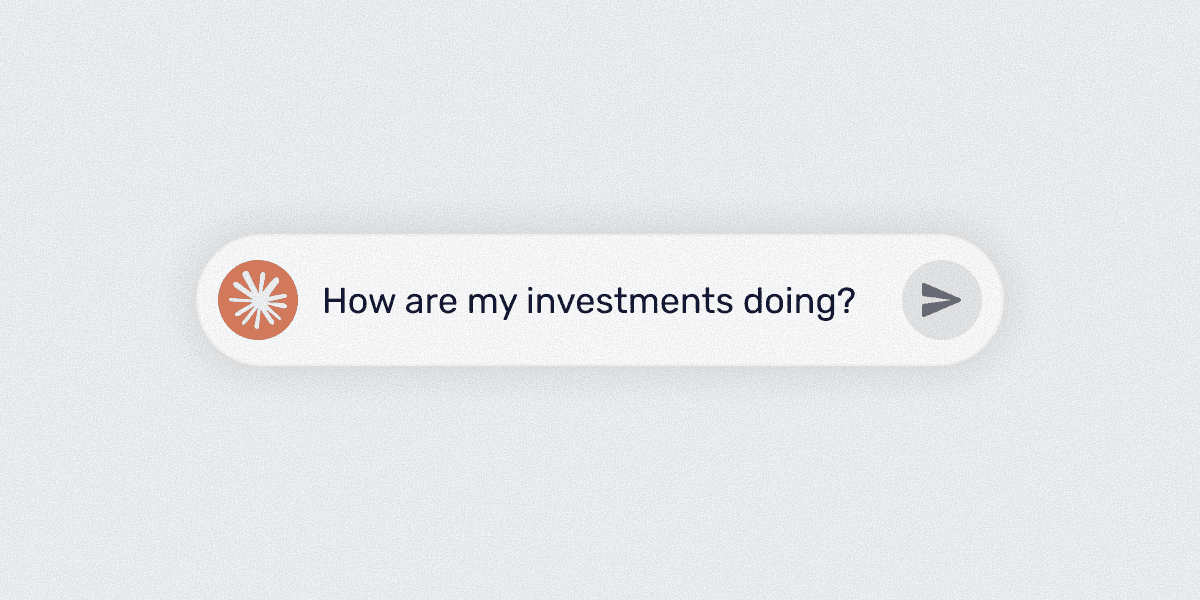

How to ask Claude about your real investment accounts
How to ask Claude about your real investment accounts
In this article
Every time you ask Claude a financial question, you’re getting an answer about someone else’s portfolio. Not yours. Claude has no idea what you actually own, what you’re actually paying, or whether your advisor is actually performing. It builds an answer around a hypothetical investor who roughly fits your description — and delivers it as if it were personal analysis.
It isn’t. And there’s a direct fix.
Connect your real account data to Claude via MCP (Model Context Protocol), the open standard for secure AI data connections, and every answer changes. Claude stops reasoning about a hypothetical investor and starts reasoning about you.
Your AI needs the truth. Truthifi is how it gets it.
Why AI gives generic financial answers
Here’s exactly why this happens. They can explain asset allocation, describe fee structures, and walk through retirement planning. What they cannot do by default is apply any of that to your situation.
When you ask "am I paying too much in fees?", Claude doesn’t know what you’re paying. When you ask "is my portfolio too concentrated?", Claude doesn’t know what you hold. Every answer is built on assumptions about a hypothetical investor. Accurate in principle — not personalised to your situation.
So what actually changes when you give Claude real data? There are two ways to do it — and only one of them works properly.
The two ways to give Claude your financial data
There are two approaches. One is manual and unreliable. The other is automated and secure.
Manual data entry. You copy and paste holdings, balances, or fee statements into the chat window. This works for a single snapshot, but it’s slow, error-prone, and raises real security concerns: you’re putting sensitive financial information directly into a conversation log that Claude’s platform may retain. It also goes stale immediately. The moment your portfolio changes, the answer is out of date. And any financial data AI conversation built on pasted snapshots is only as current as the last paste.
MCP connector. A Model Context Protocol (MCP) connector gives Claude read-only access to your live account data from a trusted financial data provider. Claude works with your real, up-to-date holdings without you ever pasting a single number. Every financial data AI conversation Claude has draws from your live, encrypted data — not a pasted snapshot that goes stale the moment your portfolio changes.
For anyone with more than one account or advisor, the connector approach isn’t just more convenient. It’s the only approach that gives you a complete picture.
What makes a financial MCP connector trustworthy
Not all financial data connectors are equal. Before connecting any data source to Claude, verify these five things. They determine whether you have real control over what the AI can see — and whether you can see everything it does.
Read-only by architecture, not just policy. The connector should be structurally incapable of placing trades or moving money — not just prohibited from doing so by terms of service. Structural constraints don’t break. Policies do.
No credential storage. Your brokerage username and password should never be seen or stored by the connector. Connections should be made through established financial data aggregators (Plaid, Yodlee, or similar) that handle authentication on their own secure infrastructure.
End-to-end encryption. Data should be encrypted both in transit and at rest. AES-256 is the industry-standard encryption worth looking for.
Audit log. You should be able to see exactly when Claude requested your data and what it accessed. Not a monthly summary — a real-time, per-request record of every data event. This is the visibility layer that turns "trust us" into documented evidence you can review at any time.
Revocable on demand. You should be able to disconnect instantly — from Claude’s connector settings and from the data provider’s account settings independently. And ideally: each agent you authorize operates within its own scoped permissions, so revoking one doesn’t affect the others. You set the permissions. You hold the controls.
"Structural constraints don’t break. Policies do."
Truthifi’s MCP connector satisfies all five, and adds one more. Unlike brokerage-specific connectors that serve as a single-platform investment account AI assistant, Truthifi is an independent wealth monitoring platform that simultaneously connects 18,000+ financial institutions, normalizing holdings and transactions across all your brokerages, advisors, and retirement accounts into a single verified picture. That’s what makes portfolio monitoring AI across multiple accounts and advisors possible.
Set it up once. Truthifi handles the data refresh automatically in the background — your accounts stay current, your agents stay connected, and you don’t have to do anything after the initial setup.
What to ask once your portfolio is connected
Once you have a trustworthy connection in place, the conversation with Claude changes entirely. Questions that used to produce generic answers now produce specific ones. When you link investment accounts to Claude via Truthifi, every prompt below becomes a real question about your actual situation — a way to ask AI about my portfolio with live, verified data rather than assumptions.
Start with a full picture:
"What is my current asset allocation across all connected accounts?"
"How is my allocation distributed between tax-advantaged and taxable accounts?"
Then go deeper on fees (for a full breakdown of what Truthifi monitors on the fee side, see The True Cost of Investing):
"Which of my funds have the highest expense ratios, and how do they compare to benchmarks?"
"What is my total all-in fee burden across advisory fees, fund expenses, and transaction costs?"
"Has my fee exposure increased or decreased over the past 12 months?"
Then concentration and risk:
"Where is my portfolio most concentrated — by sector, by security, or by single advisor?"
"What risks or concentration issues does Truthifi currently flag in my portfolio?"
"How has my allocation drifted from my target since I last rebalanced?"
Then advisor performance:
"How is each of my advisors performing relative to a relevant benchmark?"
"Are there accounts where I’m paying advisory fees but seeing below-benchmark returns?"
How to connect Truthifi to Claude
Truthifi connects to Claude via MCP with one-time setup and no API keys required. You’ll need a paid individual subscription to Claude (Pro or Max — as of March 2026).
Add the connector once in Customize > Connectors, then toggle it on at the start of each conversation. Once active, you can ask Claude about my investments and ask Claude about my portfolio with the same specificity as any wealth monitoring AI built for this purpose. You connect brokerage accounts to Claude via a secure, read-only data layer, not by pasting statements into a chat window.
Don’t have a Truthifi account yet? Start free at truthifi.com - see your real allocation in minutes, no API keys or credit card required.
Full setup guide: How to Connect Your Portfolio to Claude via Truthifi MCP
Using ChatGPT instead? See How to Ask ChatGPT About Your Real Investment Accounts or How to Connect Your Portfolio to ChatGPT via Truthifi MCP
New to AI + investing? Start with How to connect your financial accounts to an AI agent — safely, step by step
What Claude can and can’t do with your data
Connecting your data makes Claude conversations dramatically more useful, but it doesn’t make Claude a licensed financial advisor. Claude can analyze, surface, and explain what Truthifi finds in your accounts. It cannot legally recommend specific trades, provide tax advice, or substitute for a qualified financial professional.
Think of it as having a very well-informed research assistant who has read everything ever written about investing, and can now finally look at your actual situation. The decisions are still yours.
This is what AI agents were built for
For most of investing’s history, personalised financial analysis was a privilege. You needed a professional, a relationship, and enough assets to justify their time. Everyone else got generic advice — articles, calculators, rules of thumb written for the average investor.
That’s what’s changing right now. Not in some theoretical future. Today.
AI agents like Claude, connected to your actual account data, can do in seconds what used to take a 45-minute advisor meeting to set up: cross your entire portfolio against benchmarks, surface your real fee burden, flag concentration risks across every account you hold. The analysis is yours. The data is yours. The agent just makes it visible.
This is what "agentic AI" actually means for individual investors — not robots making trades, not science fiction. It means your financial picture, on demand, in plain English, whenever you need it.
Before you connect, here are the questions most readers want answered first.
Every time you ask Claude a financial question, you’re getting an answer about someone else’s portfolio. Not yours. Claude has no idea what you actually own, what you’re actually paying, or whether your advisor is actually performing. It builds an answer around a hypothetical investor who roughly fits your description — and delivers it as if it were personal analysis.
It isn’t. And there’s a direct fix.
Connect your real account data to Claude via MCP (Model Context Protocol), the open standard for secure AI data connections, and every answer changes. Claude stops reasoning about a hypothetical investor and starts reasoning about you.
Your AI needs the truth. Truthifi is how it gets it.
Why AI gives generic financial answers
Here’s exactly why this happens. They can explain asset allocation, describe fee structures, and walk through retirement planning. What they cannot do by default is apply any of that to your situation.
When you ask "am I paying too much in fees?", Claude doesn’t know what you’re paying. When you ask "is my portfolio too concentrated?", Claude doesn’t know what you hold. Every answer is built on assumptions about a hypothetical investor. Accurate in principle — not personalised to your situation.
So what actually changes when you give Claude real data? There are two ways to do it — and only one of them works properly.
The two ways to give Claude your financial data
There are two approaches. One is manual and unreliable. The other is automated and secure.
Manual data entry. You copy and paste holdings, balances, or fee statements into the chat window. This works for a single snapshot, but it’s slow, error-prone, and raises real security concerns: you’re putting sensitive financial information directly into a conversation log that Claude’s platform may retain. It also goes stale immediately. The moment your portfolio changes, the answer is out of date. And any financial data AI conversation built on pasted snapshots is only as current as the last paste.
MCP connector. A Model Context Protocol (MCP) connector gives Claude read-only access to your live account data from a trusted financial data provider. Claude works with your real, up-to-date holdings without you ever pasting a single number. Every financial data AI conversation Claude has draws from your live, encrypted data — not a pasted snapshot that goes stale the moment your portfolio changes.
For anyone with more than one account or advisor, the connector approach isn’t just more convenient. It’s the only approach that gives you a complete picture.
What makes a financial MCP connector trustworthy
Not all financial data connectors are equal. Before connecting any data source to Claude, verify these five things. They determine whether you have real control over what the AI can see — and whether you can see everything it does.
Read-only by architecture, not just policy. The connector should be structurally incapable of placing trades or moving money — not just prohibited from doing so by terms of service. Structural constraints don’t break. Policies do.
No credential storage. Your brokerage username and password should never be seen or stored by the connector. Connections should be made through established financial data aggregators (Plaid, Yodlee, or similar) that handle authentication on their own secure infrastructure.
End-to-end encryption. Data should be encrypted both in transit and at rest. AES-256 is the industry-standard encryption worth looking for.
Audit log. You should be able to see exactly when Claude requested your data and what it accessed. Not a monthly summary — a real-time, per-request record of every data event. This is the visibility layer that turns "trust us" into documented evidence you can review at any time.
Revocable on demand. You should be able to disconnect instantly — from Claude’s connector settings and from the data provider’s account settings independently. And ideally: each agent you authorize operates within its own scoped permissions, so revoking one doesn’t affect the others. You set the permissions. You hold the controls.
"Structural constraints don’t break. Policies do."
Truthifi’s MCP connector satisfies all five, and adds one more. Unlike brokerage-specific connectors that serve as a single-platform investment account AI assistant, Truthifi is an independent wealth monitoring platform that simultaneously connects 18,000+ financial institutions, normalizing holdings and transactions across all your brokerages, advisors, and retirement accounts into a single verified picture. That’s what makes portfolio monitoring AI across multiple accounts and advisors possible.
Set it up once. Truthifi handles the data refresh automatically in the background — your accounts stay current, your agents stay connected, and you don’t have to do anything after the initial setup.
What to ask once your portfolio is connected
Once you have a trustworthy connection in place, the conversation with Claude changes entirely. Questions that used to produce generic answers now produce specific ones. When you link investment accounts to Claude via Truthifi, every prompt below becomes a real question about your actual situation — a way to ask AI about my portfolio with live, verified data rather than assumptions.
Start with a full picture:
"What is my current asset allocation across all connected accounts?"
"How is my allocation distributed between tax-advantaged and taxable accounts?"
Then go deeper on fees (for a full breakdown of what Truthifi monitors on the fee side, see The True Cost of Investing):
"Which of my funds have the highest expense ratios, and how do they compare to benchmarks?"
"What is my total all-in fee burden across advisory fees, fund expenses, and transaction costs?"
"Has my fee exposure increased or decreased over the past 12 months?"
Then concentration and risk:
"Where is my portfolio most concentrated — by sector, by security, or by single advisor?"
"What risks or concentration issues does Truthifi currently flag in my portfolio?"
"How has my allocation drifted from my target since I last rebalanced?"
Then advisor performance:
"How is each of my advisors performing relative to a relevant benchmark?"
"Are there accounts where I’m paying advisory fees but seeing below-benchmark returns?"
How to connect Truthifi to Claude
Truthifi connects to Claude via MCP with one-time setup and no API keys required. You’ll need a paid individual subscription to Claude (Pro or Max — as of March 2026).
Add the connector once in Customize > Connectors, then toggle it on at the start of each conversation. Once active, you can ask Claude about my investments and ask Claude about my portfolio with the same specificity as any wealth monitoring AI built for this purpose. You connect brokerage accounts to Claude via a secure, read-only data layer, not by pasting statements into a chat window.
Don’t have a Truthifi account yet? Start free at truthifi.com - see your real allocation in minutes, no API keys or credit card required.
Full setup guide: How to Connect Your Portfolio to Claude via Truthifi MCP
Using ChatGPT instead? See How to Ask ChatGPT About Your Real Investment Accounts or How to Connect Your Portfolio to ChatGPT via Truthifi MCP
New to AI + investing? Start with How to connect your financial accounts to an AI agent — safely, step by step
What Claude can and can’t do with your data
Connecting your data makes Claude conversations dramatically more useful, but it doesn’t make Claude a licensed financial advisor. Claude can analyze, surface, and explain what Truthifi finds in your accounts. It cannot legally recommend specific trades, provide tax advice, or substitute for a qualified financial professional.
Think of it as having a very well-informed research assistant who has read everything ever written about investing, and can now finally look at your actual situation. The decisions are still yours.
This is what AI agents were built for
For most of investing’s history, personalised financial analysis was a privilege. You needed a professional, a relationship, and enough assets to justify their time. Everyone else got generic advice — articles, calculators, rules of thumb written for the average investor.
That’s what’s changing right now. Not in some theoretical future. Today.
AI agents like Claude, connected to your actual account data, can do in seconds what used to take a 45-minute advisor meeting to set up: cross your entire portfolio against benchmarks, surface your real fee burden, flag concentration risks across every account you hold. The analysis is yours. The data is yours. The agent just makes it visible.
This is what "agentic AI" actually means for individual investors — not robots making trades, not science fiction. It means your financial picture, on demand, in plain English, whenever you need it.
Before you connect, here are the questions most readers want answered first.
Frequently asked questions
Getting started
Can I ask Claude about my actual investments? Yes, but only if you connect your real account data first. The Truthifi MCP connector gives Claude read-only access to your actual portfolio data so every answer is based on your real accounts, not a hypothetical scenario.
Is Claude AI good for financial advice? Claude AI is good for financial analysis when it has your real data — and limited to generic guidance when it doesn’t. Connected to Truthifi via MCP, Claude delivers specific answers about your actual allocation, fees, and advisor performance. Without a data connection, Claude AI financial advice is built on assumptions about a hypothetical investor. The connection is what makes it genuinely useful.
Is Claude AI safe to use for financial information? Yes, with the right setup. The risk isn’t Claude itself — it’s how you give it your data. Pasting account statements or balances directly into a chat window exposes sensitive information in a conversation log. A read-only MCP connector like Truthifi gives Claude access to your data via an encrypted, tokenized connection that never exposes your credentials. That’s the safe way to use Claude for financial information.
How to use Claude for personal finance Connect your accounts via Truthifi MCP, then ask Claude specific questions about your actual situation: your real allocation, your weighted expense ratios, your advisor’s performance against a benchmark. Claude for personal finance works best as a connected analysis layer — not as a standalone chatbot you describe your finances to.
Safety & privacy
Is it safe to give AI access to my bank account? Yes, when the connection is read-only and tokenized. A properly architected MCP connector like Truthifi uses OAuth 2.0 - your bank issues a scoped access token, not your login credentials. The AI can read your data but cannot move money, execute trades, or log in as you. Read our full trustworthiness checklist above for the five things to verify before connecting any AI to your accounts.
Can AI replace a financial advisor? No — and Truthifi isn’t trying to. A financial advisor provides licensed guidance, fiduciary accountability, and comprehensive planning across your full financial life. What AI does is give you better data to bring to those conversations. With Truthifi connected, you arrive at your advisor meeting knowing your actual fees, your real allocation drift, and your concentration risks — rather than working from memory or estimates.
Claude vs ChatGPT for financial planning — which is better? For investment account analysis via MCP, Claude is the simpler path — it works on the free tier, no developer settings required. ChatGPT requires a paid plan and Developer Mode setup. Both connect to Truthifi using the same MCP protocol and deliver the same quality of analysis once connected. The right choice depends on which platform you already use.
Why does Claude give generic financial advice instead of personalized answers? Claude has no access to your personal accounts by default. When you ask about your portfolio, it reasons about a hypothetical investor, not you. Connect a financial data source like Truthifi via MCP to get answers based on your actual situation.
What is the best way to connect my portfolio to Claude? The best approach is a verified MCP connector from a trusted financial data provider. Used correctly, it enables AI portfolio analysis Claude delivers from your real accounts — specific, live, and verified — rather than a hypothetical scenario. Truthifi connects to 18,000+ institutions with read-only access, AES-256 encryption, and a complete audit log of every data request.
What can I ask Claude once my portfolio is connected? Your actual asset allocation, fee levels vs. benchmarks, concentration risks, advisor performance, allocation drift, and specific holdings flagged for risk: all based on your live data. The more accounts you connect, the more complete the portfolio monitoring AI analysis becomes.
What should I never share with Claude about my finances? Never share account numbers, Social Security numbers, full brokerage statements, or login credentials directly in an AI chat. Use a verified MCP connector instead. For full details on how Anthropic handles data you share with Claude, see Anthropic’s privacy practices.
Does using AI for finances affect my credit score? No. A read-only MCP connection to your investment accounts does not trigger a credit inquiry of any kind. Truthifi connects to brokerage, IRA, and retirement accounts — not to credit bureaus. Your credit score is unaffected.
Is it safe to use AI for my finances? Yes — with one important distinction. Pasting financial statements or balances into a chat window places sensitive information in a conversation log subject to Anthropic’s data retention policies. A read-only MCP connector like Truthifi is categorically different: your credentials never leave your bank, the AI receives a scoped read-only token, and you can revoke access at any time. That’s what makes it safe. Pasting financial statements, account numbers, or balances directly into an AI chat window is risky: that information enters a conversation log subject to the platform’s data retention policy. Using a read-only MCP connector like Truthifi is a categorically different approach: your credentials never leave your bank, the AI accesses a scoped read-only token, and you can revoke access at any time. That’s what makes it safe to use AI for your finances.
What AI can and can’t do
What financial tasks can AI do for me? With your investment accounts connected via Truthifi, Claude can: calculate your current asset allocation across all accounts, identify your highest-cost funds, compare your advisor’s performance against benchmarks, flag concentration risks, check allocation drift, and surface your total fee burden. What Claude cannot do: execute trades, move money, provide tax advice, or substitute for a qualified financial professional. Calculate your current asset allocation across all accounts, identify your highest-cost funds and weighted expense ratio, compare your advisor’s performance against benchmarks, flag concentration risks, check how far your allocation has drifted from your target, and surface your total all-in fee burden. What Claude cannot do: execute trades, move money, provide licensed tax advice, or substitute for a qualified financial professional.
Should I use a human financial planner or AI? Both — for different things. A human financial planner provides licensed fiduciary advice, tax strategy, and guidance that accounts for your full life. Claude with Truthifi provides on-demand analysis of your real accounts: actual fees, real allocation, verifiable performance. Use Claude to arrive at your advisor meeting with the analysis already done.
Can AI help me understand my 401k? Yes. With Truthifi connected, Claude can read your 401k holdings — including institutional share classes most apps misread as "Other" - and answer specific questions: which funds have the lowest expense ratios, how your allocation compares to a target-date benchmark, whether you’ve maxed your contribution this year, and how your 401k fits your overall portfolio across all accounts.
What is the best AI to ask about investing? For investment account analysis with real data, Claude via Truthifi MCP is one of the strongest options available to individual investors. It works on the free tier, requires no developer settings, and connects to 18,000+ institutions. Once connected, questions about your actual allocation, fees, and advisor performance get specific answers rather than generic guidance.
Understanding AI agents
What is an AI financial agent? An AI financial agent is an AI system — like Claude — connected to your real financial data through a secure, read-only channel. Unlike a standard chatbot that responds from general knowledge, it works from your actual holdings, fees, and balances. It’s not a robo-advisor (which manages your money) and not a licensed financial advisor (which provides regulated advice). Agentic AI for financial planning means your AI actively works from live account data rather than hypothetical assumptions.
How accurate is AI financial advice? Accuracy depends entirely on data quality. AI financial advice built from your real account data — live holdings, actual fees, verified balances via Truthifi — is accurate for analysis of your specific situation. Without that connection, Claude’s financial advice is accurate only in a generic sense: technically correct for a hypothetical investor, not calibrated to you. The data connection is what makes AI financial advice accurate for your situation rather than someone like you.
How do I start using AI to manage my money? Start by connecting your accounts. Without real data, AI can only give you generic financial guidance. The practical steps: create a free Truthifi account at truthifi.com, connect your brokerage and retirement accounts via OAuth (your credentials never leave your bank), then add Truthifi as an MCP connector in Claude’s Integrations settings. From that point, every question you ask Claude about your finances gets answered from your real accounts.
Agentic AI for financial planning — what does that actually mean? Agentic AI for financial planning means your AI works from live account data rather than hypothetical assumptions. Instead of describing your finances to Claude and getting generic guidance back, you connect your real accounts and Claude reasons from your actual holdings, fees, and allocation. That’s what makes agentic AI useful for financial planning: real data, specific answers, on demand — without a standing appointment.
AI vs. your advisor
Will AI replace financial advisors by 2030? Unlikely — but the relationship is already changing. AI is taking over the data layer: surfacing real fees, tracking allocation drift, flagging concentration risks, and benchmarking advisor performance automatically. What human advisors do — fiduciary judgment, tax strategy, estate planning, behavioral coaching — is not something AI can replicate or is licensed to provide. The most likely outcome by 2030 is not replacement but redefinition: advisors who use AI tools to serve clients better outcompeting those who don’t. Truthifi is built for that future — giving both investors and their advisors a live, complete view of the portfolio.
Do I still need a financial advisor if I use AI tools? Yes, for most people. AI tools like Claude and ChatGPT connected to Truthifi give you better data — your real fees, your actual allocation, your advisor’s performance against a benchmark. What they cannot give you is fiduciary accountability, licensed advice, tax strategy, or the behavioral coaching that keeps investors from making costly decisions during market volatility. Think of AI as making your advisor conversations more productive, not making them optional.
Can AI manage my money while I sleep? It can monitor it. With Truthifi connected, Claude or ChatGPT can be asked to analyse your portfolio at any time — including checking for allocation drift, flagging fee anomalies, or surfacing concentration risks — without you having to do anything after the initial setup. Truthifi refreshes your account data automatically in the background. What AI cannot do is move money, execute trades, or make decisions on your behalf. It monitors and analyses; you and your advisor act.
How do I use AI to prepare for a meeting with my financial advisor? Before your next advisor meeting connect your accounts via Truthifi, then ask Claude (connected to Truthifi): what is my actual all-in fee burden across all accounts? How has my allocation drifted from target over the past quarter? Where is my portfolio most concentrated? How does my advisor’s performance compare to a relevant benchmark? Arriving at an advisor meeting with those answers already in hand changes the conversation from data gathering to decision making.
AI financial advice hallucinations — what are the risks? Real and worth understanding. AI models can confidently state things that are factually incorrect, particularly when reasoning about specific financial rules, tax thresholds, or product details. The risk is highest when AI has no real data to work from — it fills the gap with plausible-sounding assumptions. With a verified data connection like Truthifi, AI is reasoning from your actual holdings and fees, not constructing a hypothetical. The risk does not go to zero, but it is substantially reduced when the AI is working from verified inputs rather than general knowledge.
What should I not tell AI about my money? Never share account numbers, Social Security numbers, full brokerage statements, passwords, or login credentials directly in an AI chat window. This information enters a conversation log subject to the platform’s data retention policies — and it creates unnecessary exposure. Use a verified read-only MCP connector like Truthifi instead: your credentials stay at your bank, the AI receives only a scoped access token, and you can revoke access at any time without changing your passwords.
How do I use AI to track my net worth? Connect your accounts via Truthifi, which aggregates across 18,000+ financial institutions — brokerage, IRA, 401k, and bank accounts — into a single normalized picture. Ask Claude for a complete net worth breakdown across all accounts, updated automatically as holdings and balances change. No manual effort after the initial setup.
Is AI financial advice dangerous? Only if you treat analysis as advice. AI connected to your real account data can accurately surface your fees, allocation, concentration risks, and advisor performance — that analysis is reliable and useful. Where AI becomes dangerous is when users treat it as a licensed financial advisor: following specific trade recommendations, acting on tax guidance, or making major financial decisions without professional input. Truthifi’s integration is designed for analysis and monitoring, not for replacing licensed professional guidance.
How do you use AI to plan for retirement if you started late? Start with an honest picture of where you are: connect your retirement accounts to Truthifi and ask Claude or ChatGPT to calculate your current retirement savings rate, your all-in fee burden across all retirement accounts, and how your allocation compares to a target-date benchmark for your age. The most common late-starter mistakes — paying too much in fees and holding an allocation too conservative for a long time horizon — are exactly what AI with real account data can surface quickly. From there, the conversation with a financial advisor becomes much more specific.
What is the difference between AI and a robo advisor? A robo advisor manages your money: it sets an allocation, executes trades, and rebalances automatically on your behalf. An AI assistant connected to your accounts via Truthifi analyses your money: it reads your holdings, calculates your fees, flags drift, and answers questions — but takes no action. Robo advisors have discretionary authority over your portfolio; AI with a read-only MCP connection has read access only. They serve different purposes. Many investors use both: a robo advisor for one account and AI analysis to monitor the full picture across all accounts.
AI portfolio management vs robo advisor — which is better? They are not competing products — they do different things. A robo advisor automatically manages a specific account: it sets your allocation, rebalances, and executes. AI portfolio management via Truthifi gives you analysis across all your accounts — including accounts managed by robo advisors, human advisors, and brokerages — in one place. The typical Truthifi user has multiple accounts; the value is the complete picture across all of them, not management of any single one.
AI for net worth tracking — how does it work? Connect your financial accounts to Truthifi and your AI has a live, normalized view of your assets across all institutions. Ask it for your current net worth, your net worth broken down by account type, or how your net worth has changed over a given period. Because Truthifi refreshes data automatically, your net worth figure stays current without any manual updates. It is one of the cleaner applications of AI connected to real financial data — fast, accurate, and genuinely useful as a financial baseline.
Are AI investment returns better than managed funds? This question contains a category error worth clarifying: AI tools connected to your accounts via Truthifi do not invest your money or generate returns. They analyze your existing investments. Whether AI-driven investment strategies outperform managed funds is a separate and actively debated question in quantitative finance — with mixed evidence depending on asset class, time horizon, and methodology. What Truthifi gives you is the ability to see how your current investments are actually performing relative to benchmarks, which is the necessary starting point for any honest evaluation.
Can AI make you lose money on investments? Indirectly, yes — if you act on bad analysis. AI that lacks your real account data can confidently produce analysis that is technically coherent but wrong for your situation: for example, recommending rebalancing based on an assumed allocation that does not match what you actually hold. With a verified data connection like Truthifi, AI is working from your real holdings — which substantially reduces the risk of reasoning from a false premise. The residual risk is acting on AI analysis without professional review for material decisions.
Autonomous AI for managing my investments — is that what this is? Not exactly. Truthifi gives Claude and ChatGPT read-only access to your investment accounts — so the AI can analyze, monitor, and report, but cannot take any action. No trades, no rebalancing, no money movement. Fully autonomous AI investment management — where an AI agent has discretionary authority to execute transactions — exists in some platforms, but carries significantly different risk and regulatory considerations. Truthifi is built for the informed-investor use case: you see everything, you decide everything, the AI helps you understand it.
Claude AI for analyzing financial documents — can it do that? Yes. With Truthifi connected, Claude can analyze your financial documents as data — reading your actual holdings, fee statements, and performance records normalized from 18,000+ institutions. You can also upload PDF statements directly for one-off analysis, though the live MCP connection gives Claude continuously updated data rather than a static snapshot.
Can I ask Claude about my actual investments?
Yes, but only if you connect your real account data first. The Truthifi MCP connector gives Claude read-only access to your actual portfolio data so every answer is based on your real accounts, not a hypothetical scenario.
Why does Claude give generic financial advice instead of personalized answers?
Claude has no access to your personal accounts by default. When you ask about your portfolio, it reasons about a hypothetical investor, not you. Connect a financial data source like Truthifi via MCP to get answers based on your actual situation.
What is the best way to connect my portfolio to Claude?
The best approach is a verified MCP connector from a trusted financial data provider. Used correctly, it turns Claude into an investment account AI assistant that works from your real data. Truthifi connects to 18,000+ institutions with read-only access, AES-256 encryption, and a complete audit log of every data request.
Is it safe to connect my investment accounts to Claude?
It depends on the connector. With Truthifi, access is read-only by architectural constraint, data is encrypted end-to-end, you control which accounts are shared, and you can revoke access at any time. Never share account credentials or full statements directly in a Claude chat window.
What can I ask Claude once my portfolio is connected?
Your actual asset allocation, fee levels vs. benchmarks, concentration risks, advisor performance, allocation drift, and specific holdings flagged for risk — all based on your live data. The more accounts you connect, the more complete the portfolio monitoring AI analysis becomes.
What should I never share with Claude about my finances?
Never share account numbers, Social Security numbers, full brokerage statements, or login credentials directly in a Claude chat. Use a verified MCP connector instead — it gives Claude read access to your data without exposing sensitive identifying information in the conversation window.
Stop asking Claude about a hypothetical portfolio
Right now, every financial question you ask Claude gets a generic answer — because Claude has no idea what’s actually in your accounts. One connection changes that. Your real allocation. Your actual fees. Your advisor’s real performance against a benchmark.
Not a general framework for someone like you. Your numbers.
See your real allocation in minutes. Start free at truthifi.com →
Know more. Share less. Sleep well.
About the author: Scott Blandford is Founder & CEO of Truthifi, where he leads the company’s vision for transparent, AI-powered financial intelligence. Before founding Truthifi, Scott spent 25+ years in financial services, including senior roles at Fidelity Investments, Merrill Lynch, Bank of America, and TIAA, building the data infrastructure that institutions rely on to manage wealth at scale. He writes about the technology reshaping how people connect with and understand their financial lives.
Reviewed by Mike Young, Head of Product at Truthifi. Mike has 20+ years building digital investment platforms at Merrill Lynch, TIAA, JP Morgan, and Vanguard.
Related connect guides
Connect your AI to your real accounts and run an independent check using Truthifi.
Browse the full hub: All Truthifi Connect Guides
Available for ChatGPT · Claude · Perplexity · Grok · OpenClaw.
Frequently asked questions
Getting started
Can I ask Claude about my actual investments? Yes, but only if you connect your real account data first. The Truthifi MCP connector gives Claude read-only access to your actual portfolio data so every answer is based on your real accounts, not a hypothetical scenario.
Is Claude AI good for financial advice? Claude AI is good for financial analysis when it has your real data — and limited to generic guidance when it doesn’t. Connected to Truthifi via MCP, Claude delivers specific answers about your actual allocation, fees, and advisor performance. Without a data connection, Claude AI financial advice is built on assumptions about a hypothetical investor. The connection is what makes it genuinely useful.
Is Claude AI safe to use for financial information? Yes, with the right setup. The risk isn’t Claude itself — it’s how you give it your data. Pasting account statements or balances directly into a chat window exposes sensitive information in a conversation log. A read-only MCP connector like Truthifi gives Claude access to your data via an encrypted, tokenized connection that never exposes your credentials. That’s the safe way to use Claude for financial information.
How to use Claude for personal finance Connect your accounts via Truthifi MCP, then ask Claude specific questions about your actual situation: your real allocation, your weighted expense ratios, your advisor’s performance against a benchmark. Claude for personal finance works best as a connected analysis layer — not as a standalone chatbot you describe your finances to.
Safety & privacy
Is it safe to give AI access to my bank account? Yes, when the connection is read-only and tokenized. A properly architected MCP connector like Truthifi uses OAuth 2.0 - your bank issues a scoped access token, not your login credentials. The AI can read your data but cannot move money, execute trades, or log in as you. Read our full trustworthiness checklist above for the five things to verify before connecting any AI to your accounts.
Can AI replace a financial advisor? No — and Truthifi isn’t trying to. A financial advisor provides licensed guidance, fiduciary accountability, and comprehensive planning across your full financial life. What AI does is give you better data to bring to those conversations. With Truthifi connected, you arrive at your advisor meeting knowing your actual fees, your real allocation drift, and your concentration risks — rather than working from memory or estimates.
Claude vs ChatGPT for financial planning — which is better? For investment account analysis via MCP, Claude is the simpler path — it works on the free tier, no developer settings required. ChatGPT requires a paid plan and Developer Mode setup. Both connect to Truthifi using the same MCP protocol and deliver the same quality of analysis once connected. The right choice depends on which platform you already use.
Why does Claude give generic financial advice instead of personalized answers? Claude has no access to your personal accounts by default. When you ask about your portfolio, it reasons about a hypothetical investor, not you. Connect a financial data source like Truthifi via MCP to get answers based on your actual situation.
What is the best way to connect my portfolio to Claude? The best approach is a verified MCP connector from a trusted financial data provider. Used correctly, it enables AI portfolio analysis Claude delivers from your real accounts — specific, live, and verified — rather than a hypothetical scenario. Truthifi connects to 18,000+ institutions with read-only access, AES-256 encryption, and a complete audit log of every data request.
What can I ask Claude once my portfolio is connected? Your actual asset allocation, fee levels vs. benchmarks, concentration risks, advisor performance, allocation drift, and specific holdings flagged for risk: all based on your live data. The more accounts you connect, the more complete the portfolio monitoring AI analysis becomes.
What should I never share with Claude about my finances? Never share account numbers, Social Security numbers, full brokerage statements, or login credentials directly in an AI chat. Use a verified MCP connector instead. For full details on how Anthropic handles data you share with Claude, see Anthropic’s privacy practices.
Does using AI for finances affect my credit score? No. A read-only MCP connection to your investment accounts does not trigger a credit inquiry of any kind. Truthifi connects to brokerage, IRA, and retirement accounts — not to credit bureaus. Your credit score is unaffected.
Is it safe to use AI for my finances? Yes — with one important distinction. Pasting financial statements or balances into a chat window places sensitive information in a conversation log subject to Anthropic’s data retention policies. A read-only MCP connector like Truthifi is categorically different: your credentials never leave your bank, the AI receives a scoped read-only token, and you can revoke access at any time. That’s what makes it safe. Pasting financial statements, account numbers, or balances directly into an AI chat window is risky: that information enters a conversation log subject to the platform’s data retention policy. Using a read-only MCP connector like Truthifi is a categorically different approach: your credentials never leave your bank, the AI accesses a scoped read-only token, and you can revoke access at any time. That’s what makes it safe to use AI for your finances.
What AI can and can’t do
What financial tasks can AI do for me? With your investment accounts connected via Truthifi, Claude can: calculate your current asset allocation across all accounts, identify your highest-cost funds, compare your advisor’s performance against benchmarks, flag concentration risks, check allocation drift, and surface your total fee burden. What Claude cannot do: execute trades, move money, provide tax advice, or substitute for a qualified financial professional. Calculate your current asset allocation across all accounts, identify your highest-cost funds and weighted expense ratio, compare your advisor’s performance against benchmarks, flag concentration risks, check how far your allocation has drifted from your target, and surface your total all-in fee burden. What Claude cannot do: execute trades, move money, provide licensed tax advice, or substitute for a qualified financial professional.
Should I use a human financial planner or AI? Both — for different things. A human financial planner provides licensed fiduciary advice, tax strategy, and guidance that accounts for your full life. Claude with Truthifi provides on-demand analysis of your real accounts: actual fees, real allocation, verifiable performance. Use Claude to arrive at your advisor meeting with the analysis already done.
Can AI help me understand my 401k? Yes. With Truthifi connected, Claude can read your 401k holdings — including institutional share classes most apps misread as "Other" - and answer specific questions: which funds have the lowest expense ratios, how your allocation compares to a target-date benchmark, whether you’ve maxed your contribution this year, and how your 401k fits your overall portfolio across all accounts.
What is the best AI to ask about investing? For investment account analysis with real data, Claude via Truthifi MCP is one of the strongest options available to individual investors. It works on the free tier, requires no developer settings, and connects to 18,000+ institutions. Once connected, questions about your actual allocation, fees, and advisor performance get specific answers rather than generic guidance.
Understanding AI agents
What is an AI financial agent? An AI financial agent is an AI system — like Claude — connected to your real financial data through a secure, read-only channel. Unlike a standard chatbot that responds from general knowledge, it works from your actual holdings, fees, and balances. It’s not a robo-advisor (which manages your money) and not a licensed financial advisor (which provides regulated advice). Agentic AI for financial planning means your AI actively works from live account data rather than hypothetical assumptions.
How accurate is AI financial advice? Accuracy depends entirely on data quality. AI financial advice built from your real account data — live holdings, actual fees, verified balances via Truthifi — is accurate for analysis of your specific situation. Without that connection, Claude’s financial advice is accurate only in a generic sense: technically correct for a hypothetical investor, not calibrated to you. The data connection is what makes AI financial advice accurate for your situation rather than someone like you.
How do I start using AI to manage my money? Start by connecting your accounts. Without real data, AI can only give you generic financial guidance. The practical steps: create a free Truthifi account at truthifi.com, connect your brokerage and retirement accounts via OAuth (your credentials never leave your bank), then add Truthifi as an MCP connector in Claude’s Integrations settings. From that point, every question you ask Claude about your finances gets answered from your real accounts.
Agentic AI for financial planning — what does that actually mean? Agentic AI for financial planning means your AI works from live account data rather than hypothetical assumptions. Instead of describing your finances to Claude and getting generic guidance back, you connect your real accounts and Claude reasons from your actual holdings, fees, and allocation. That’s what makes agentic AI useful for financial planning: real data, specific answers, on demand — without a standing appointment.
AI vs. your advisor
Will AI replace financial advisors by 2030? Unlikely — but the relationship is already changing. AI is taking over the data layer: surfacing real fees, tracking allocation drift, flagging concentration risks, and benchmarking advisor performance automatically. What human advisors do — fiduciary judgment, tax strategy, estate planning, behavioral coaching — is not something AI can replicate or is licensed to provide. The most likely outcome by 2030 is not replacement but redefinition: advisors who use AI tools to serve clients better outcompeting those who don’t. Truthifi is built for that future — giving both investors and their advisors a live, complete view of the portfolio.
Do I still need a financial advisor if I use AI tools? Yes, for most people. AI tools like Claude and ChatGPT connected to Truthifi give you better data — your real fees, your actual allocation, your advisor’s performance against a benchmark. What they cannot give you is fiduciary accountability, licensed advice, tax strategy, or the behavioral coaching that keeps investors from making costly decisions during market volatility. Think of AI as making your advisor conversations more productive, not making them optional.
Can AI manage my money while I sleep? It can monitor it. With Truthifi connected, Claude or ChatGPT can be asked to analyse your portfolio at any time — including checking for allocation drift, flagging fee anomalies, or surfacing concentration risks — without you having to do anything after the initial setup. Truthifi refreshes your account data automatically in the background. What AI cannot do is move money, execute trades, or make decisions on your behalf. It monitors and analyses; you and your advisor act.
How do I use AI to prepare for a meeting with my financial advisor? Before your next advisor meeting connect your accounts via Truthifi, then ask Claude (connected to Truthifi): what is my actual all-in fee burden across all accounts? How has my allocation drifted from target over the past quarter? Where is my portfolio most concentrated? How does my advisor’s performance compare to a relevant benchmark? Arriving at an advisor meeting with those answers already in hand changes the conversation from data gathering to decision making.
AI financial advice hallucinations — what are the risks? Real and worth understanding. AI models can confidently state things that are factually incorrect, particularly when reasoning about specific financial rules, tax thresholds, or product details. The risk is highest when AI has no real data to work from — it fills the gap with plausible-sounding assumptions. With a verified data connection like Truthifi, AI is reasoning from your actual holdings and fees, not constructing a hypothetical. The risk does not go to zero, but it is substantially reduced when the AI is working from verified inputs rather than general knowledge.
What should I not tell AI about my money? Never share account numbers, Social Security numbers, full brokerage statements, passwords, or login credentials directly in an AI chat window. This information enters a conversation log subject to the platform’s data retention policies — and it creates unnecessary exposure. Use a verified read-only MCP connector like Truthifi instead: your credentials stay at your bank, the AI receives only a scoped access token, and you can revoke access at any time without changing your passwords.
How do I use AI to track my net worth? Connect your accounts via Truthifi, which aggregates across 18,000+ financial institutions — brokerage, IRA, 401k, and bank accounts — into a single normalized picture. Ask Claude for a complete net worth breakdown across all accounts, updated automatically as holdings and balances change. No manual effort after the initial setup.
Is AI financial advice dangerous? Only if you treat analysis as advice. AI connected to your real account data can accurately surface your fees, allocation, concentration risks, and advisor performance — that analysis is reliable and useful. Where AI becomes dangerous is when users treat it as a licensed financial advisor: following specific trade recommendations, acting on tax guidance, or making major financial decisions without professional input. Truthifi’s integration is designed for analysis and monitoring, not for replacing licensed professional guidance.
How do you use AI to plan for retirement if you started late? Start with an honest picture of where you are: connect your retirement accounts to Truthifi and ask Claude or ChatGPT to calculate your current retirement savings rate, your all-in fee burden across all retirement accounts, and how your allocation compares to a target-date benchmark for your age. The most common late-starter mistakes — paying too much in fees and holding an allocation too conservative for a long time horizon — are exactly what AI with real account data can surface quickly. From there, the conversation with a financial advisor becomes much more specific.
What is the difference between AI and a robo advisor? A robo advisor manages your money: it sets an allocation, executes trades, and rebalances automatically on your behalf. An AI assistant connected to your accounts via Truthifi analyses your money: it reads your holdings, calculates your fees, flags drift, and answers questions — but takes no action. Robo advisors have discretionary authority over your portfolio; AI with a read-only MCP connection has read access only. They serve different purposes. Many investors use both: a robo advisor for one account and AI analysis to monitor the full picture across all accounts.
AI portfolio management vs robo advisor — which is better? They are not competing products — they do different things. A robo advisor automatically manages a specific account: it sets your allocation, rebalances, and executes. AI portfolio management via Truthifi gives you analysis across all your accounts — including accounts managed by robo advisors, human advisors, and brokerages — in one place. The typical Truthifi user has multiple accounts; the value is the complete picture across all of them, not management of any single one.
AI for net worth tracking — how does it work? Connect your financial accounts to Truthifi and your AI has a live, normalized view of your assets across all institutions. Ask it for your current net worth, your net worth broken down by account type, or how your net worth has changed over a given period. Because Truthifi refreshes data automatically, your net worth figure stays current without any manual updates. It is one of the cleaner applications of AI connected to real financial data — fast, accurate, and genuinely useful as a financial baseline.
Are AI investment returns better than managed funds? This question contains a category error worth clarifying: AI tools connected to your accounts via Truthifi do not invest your money or generate returns. They analyze your existing investments. Whether AI-driven investment strategies outperform managed funds is a separate and actively debated question in quantitative finance — with mixed evidence depending on asset class, time horizon, and methodology. What Truthifi gives you is the ability to see how your current investments are actually performing relative to benchmarks, which is the necessary starting point for any honest evaluation.
Can AI make you lose money on investments? Indirectly, yes — if you act on bad analysis. AI that lacks your real account data can confidently produce analysis that is technically coherent but wrong for your situation: for example, recommending rebalancing based on an assumed allocation that does not match what you actually hold. With a verified data connection like Truthifi, AI is working from your real holdings — which substantially reduces the risk of reasoning from a false premise. The residual risk is acting on AI analysis without professional review for material decisions.
Autonomous AI for managing my investments — is that what this is? Not exactly. Truthifi gives Claude and ChatGPT read-only access to your investment accounts — so the AI can analyze, monitor, and report, but cannot take any action. No trades, no rebalancing, no money movement. Fully autonomous AI investment management — where an AI agent has discretionary authority to execute transactions — exists in some platforms, but carries significantly different risk and regulatory considerations. Truthifi is built for the informed-investor use case: you see everything, you decide everything, the AI helps you understand it.
Claude AI for analyzing financial documents — can it do that? Yes. With Truthifi connected, Claude can analyze your financial documents as data — reading your actual holdings, fee statements, and performance records normalized from 18,000+ institutions. You can also upload PDF statements directly for one-off analysis, though the live MCP connection gives Claude continuously updated data rather than a static snapshot.
Can I ask Claude about my actual investments?
Yes, but only if you connect your real account data first. The Truthifi MCP connector gives Claude read-only access to your actual portfolio data so every answer is based on your real accounts, not a hypothetical scenario.
Why does Claude give generic financial advice instead of personalized answers?
Claude has no access to your personal accounts by default. When you ask about your portfolio, it reasons about a hypothetical investor, not you. Connect a financial data source like Truthifi via MCP to get answers based on your actual situation.
What is the best way to connect my portfolio to Claude?
The best approach is a verified MCP connector from a trusted financial data provider. Used correctly, it turns Claude into an investment account AI assistant that works from your real data. Truthifi connects to 18,000+ institutions with read-only access, AES-256 encryption, and a complete audit log of every data request.
Is it safe to connect my investment accounts to Claude?
It depends on the connector. With Truthifi, access is read-only by architectural constraint, data is encrypted end-to-end, you control which accounts are shared, and you can revoke access at any time. Never share account credentials or full statements directly in a Claude chat window.
What can I ask Claude once my portfolio is connected?
Your actual asset allocation, fee levels vs. benchmarks, concentration risks, advisor performance, allocation drift, and specific holdings flagged for risk — all based on your live data. The more accounts you connect, the more complete the portfolio monitoring AI analysis becomes.
What should I never share with Claude about my finances?
Never share account numbers, Social Security numbers, full brokerage statements, or login credentials directly in a Claude chat. Use a verified MCP connector instead — it gives Claude read access to your data without exposing sensitive identifying information in the conversation window.
Stop asking Claude about a hypothetical portfolio
Right now, every financial question you ask Claude gets a generic answer — because Claude has no idea what’s actually in your accounts. One connection changes that. Your real allocation. Your actual fees. Your advisor’s real performance against a benchmark.
Not a general framework for someone like you. Your numbers.
See your real allocation in minutes. Start free at truthifi.com →
Know more. Share less. Sleep well.
About the author: Scott Blandford is Founder & CEO of Truthifi, where he leads the company’s vision for transparent, AI-powered financial intelligence. Before founding Truthifi, Scott spent 25+ years in financial services, including senior roles at Fidelity Investments, Merrill Lynch, Bank of America, and TIAA, building the data infrastructure that institutions rely on to manage wealth at scale. He writes about the technology reshaping how people connect with and understand their financial lives.
Reviewed by Mike Young, Head of Product at Truthifi. Mike has 20+ years building digital investment platforms at Merrill Lynch, TIAA, JP Morgan, and Vanguard.
Related connect guides
Connect your AI to your real accounts and run an independent check using Truthifi.
Browse the full hub: All Truthifi Connect Guides
Available for ChatGPT · Claude · Perplexity · Grok · OpenClaw.
Disclaimer: This article is for educational purposes only and does not constitute financial, tax, or legal advice. It should not be construed as a personalized recommendation regarding any investment, financial advisor, or financial product. All calculations use hypothetical scenarios and historical return assumptions; actual results will vary. Past performance does not guarantee future results. Consult a qualified financial professional for guidance specific to your situation. Truthifi is an investment monitoring platform — not a financial advisor, broker-dealer, or tax professional. Truthifi does not manage assets, recommend investments, sell financial products, or provide personalized financial advice. Truthifi earns no revenue from advisor referrals, product commissions, or AUM fees. Statistics and data cited reflect publicly available sources current as of the article's publication date. Sources are linked throughout.
Disclaimer: This article is for educational purposes only and does not constitute financial, tax, or legal advice. It should not be construed as a personalized recommendation regarding any investment, financial advisor, or financial product. All calculations use hypothetical scenarios and historical return assumptions; actual results will vary. Past performance does not guarantee future results. Consult a qualified financial professional for guidance specific to your situation. Truthifi is an investment monitoring platform — not a financial advisor, broker-dealer, or tax professional. Truthifi does not manage assets, recommend investments, sell financial products, or provide personalized financial advice. Truthifi earns no revenue from advisor referrals, product commissions, or AUM fees. Statistics and data cited reflect publicly available sources current as of the article's publication date. Sources are linked throughout.
Disclaimer: This article is for educational purposes only and does not constitute financial, tax, or legal advice. It should not be construed as a personalized recommendation regarding any investment, financial advisor, or financial product. All calculations use hypothetical scenarios and historical return assumptions; actual results will vary. Past performance does not guarantee future results. Consult a qualified financial professional for guidance specific to your situation. Truthifi is an investment monitoring platform — not a financial advisor, broker-dealer, or tax professional. Truthifi does not manage assets, recommend investments, sell financial products, or provide personalized financial advice. Truthifi earns no revenue from advisor referrals, product commissions, or AUM fees. Statistics and data cited reflect publicly available sources current as of the article's publication date. Sources are linked throughout.
Ready to get started?
Stop living in spreadsheets.
$4,000,000,000+
Monitored
18,000+
Providers covered
Bank-grade
Security
features
Company
Legal
Stop living in spreadsheets.
$4,000,000,000+
Monitored
18,000+
Providers covered
Bank-grade
Security
features
Company
Legal
Stop living in spreadsheets.
$4,000,000,000+
Monitored
18,000+
Providers covered
Bank-grade
Security
features
Company
Legal